


 16 / 20

16
Slideways is fun!
Words and Pictures by Bob Campbell
Every historic racer has been asked at some time why he or
she races old cars. The question is often put less politely, but
that’s the gist of it.
My own theory is that old cars are a lot more fun than
modern ones. They slide before the G-forces build up to the
point where they are extruding your brain through your outboard ear.
The fast way through a corner in the fifties and sixties, before the advent of wings and slicks,
was the four-wheel-drift, which according to Stirling Moss required a power to weight ratio
of at least 200bhp per ton on those skinny 1950s tires. Moss and the incomparable Fangio
were masters of the drift, their cars floating through corners, controlled by a delicate balance
of power and steering. To compare the racecars of the fifties with today’s glued to the road,
winged monsters is like comparing the Bolshoi Ballet with the Superbowl.
But then, most cars slid more easily in the days when we baby boomers were teaching
ourselves to drive fast. Sideways was in. The late Roger Clark put it in words: “If you are not
looking where you are going out of the back window, it’s
recoverable.” Of course, we lived by that creed before
anyone put it into words.
I worked for the government in my younger days, driving
a basic Holden sedan mounted on locally made tires that
skidded on principal if you drove past a lawn sprinkler.
Senior members of the department warned me about that
car. “Everybody who drives it regularly has spun that thing
on a wet road. Watch it!”
That spelt challenge to a teenage hotshot. I soon
discovered that, although the Holden needed fast reflexes to catch it if it let go unexpectedly,
it was eminently controllable if you dirt-tracked it. Traffic must have been much lighter in
those days. Roundabouts were an excuse for glorious oversteer slides and the downhill, off
camber left-hander coming away from our state parliament building into Malcolm Street
was terrific fun. I used to wonder why Holden didn’t put wipers on the side windows.
For some reason, passengers and other drivers didn’t share my enthusiasm - or my
confidence in my driving skills. I loved sideways. Given the choice of routes, I would take a
gravel road. That’s Western Australia’s infamous ball-bearing gravel, the surface of many
country roads here in the sixties. Today the gravel roads are harder to find, are narrower and
have more blind bends and crests. Or maybe Stirling Moss had it right when he said in
Adelaide at the 1986 AGP: “As I get older, the threshold of fear seems to get closer.”
Be that as it may, I reckon that’s why so many people love to race vintage cars. You can drive
them slideways!
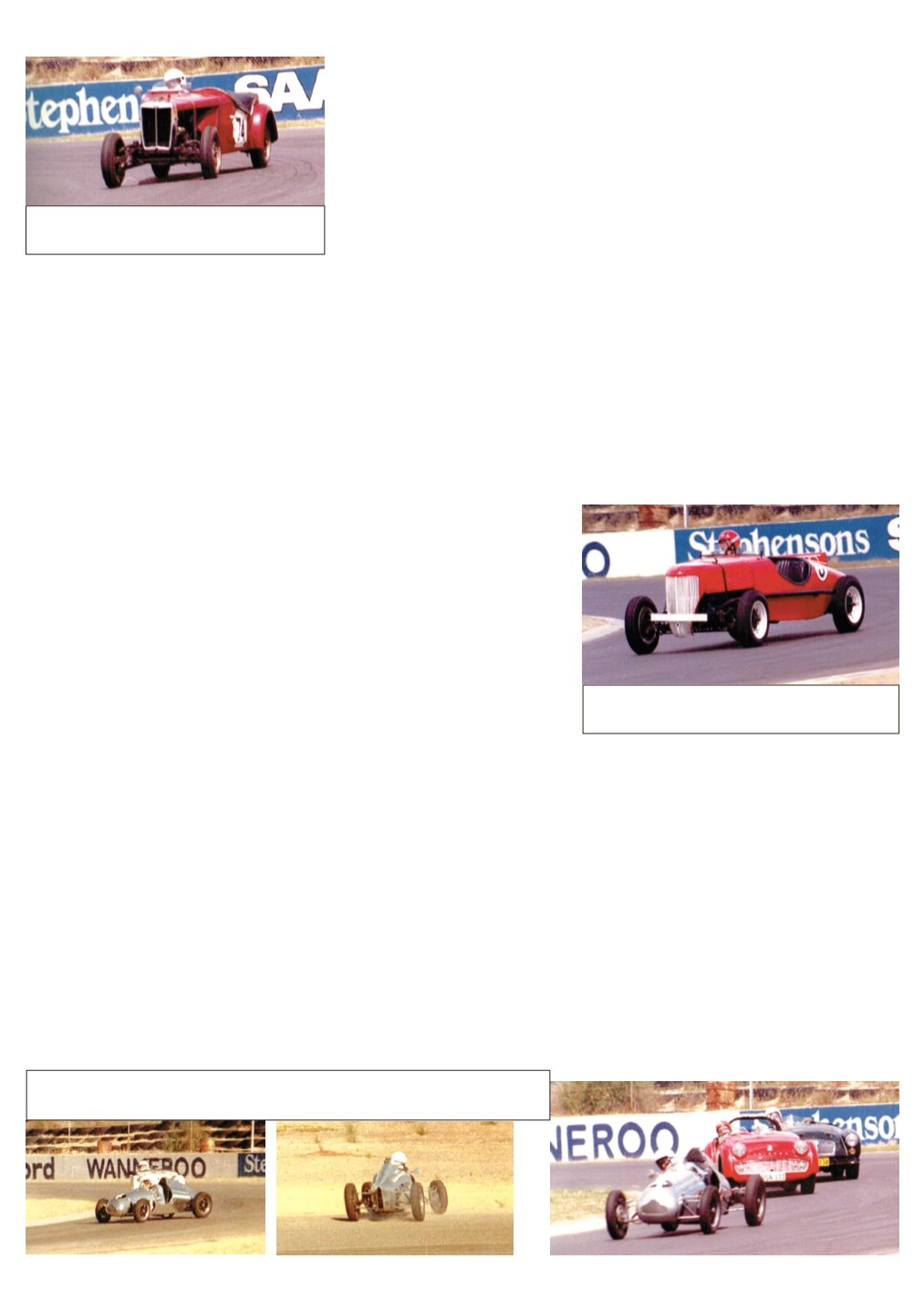
The late Andy Whyte has his TD
well hooked up
Max Gamble slides the Ossie
Cranston Special
L-R: Ian Boughton shows how it's done...Well, almost.
Then he shows two sports car drivers the way.