


 12 / 40

12
Australian Journal of Dementia Care
June/July 2016 Vol 5 No 3
R
egular readers of this journal will be familiar
with the ongoing, and at times intense,
debate about language choices and how they
affect people who are living with dementia. This is
particularly so of the language employed to
describe or define behaviour.
The fact that language is debated in this way
should not be seen in a negative light – it can be
framed as a sign of a growing awareness in how we
think about dementia and the impact of language.
We may be far from reaching a consensus on terms
like behavioural and psychological symptoms of
dementia (BPSD), but we must engage with people
who are living with the condition to understand it
from the lived experience. The debate is also an
opportunity to reflect on the narrative we thicken
or thin via our language choices: the problem-
based narrative of deficit and loss or the narrative
of hope, individuality and finding strengths at all
points on the trajectory of dementia.
Common ground
In any contentious situation it is worth
acknowledging common ground. There is
widespread recognition that language is both
powerful and ever-evolving and that stigma
impacts real people with real lives. Our language
choices are a potentially helpful component in the
armoury to counteract stigma in every conversation
we have; with people with dementia, colleagues,
family, in progress notes and handovers. Too often
we underestimate the power of the narrative in
which we engage. When our narrative is rich in
strengths and positive associations we encourage
the people around us to have hope that people with
dementia are valued and can live lives worth living.
This article is not intended to provide definitive
answers to the contested language but it attempts to
provide a useful perspective and contribution to the
discussion. I will also offer some background and
framing of the discussion about the perceptions and
portrayal of dementia and behaviour and consider
the context of language choice.
The issue has been a topic of much discussion
and reflection in the Dementia Training Study
Centres (DTSC) / Dementia Behaviour Advisory
Services (DBMAS) regular collaborative working
group meetings. To further reflect on the impact of
language, we were privileged to have dementia
advocate Christine Bryden, who is living with
dementia, provide the DBMAS Leadership Group
with her perspective on the issue (see box p15) at
our national meeting earlier this year.
Why do our language choices matter?
The stigma associated with dementia has been
extensively written about and discussed by people
living with a cognitive disability, family members,
academics, care professionals and peak bodies.
The language we choose to represent people with
dementia and their experience of the world can
serve to add to stigma or help to support wider
efforts to reduce stigma.
Our language choices are just one element in the
effort to improve both the practice of dementia
care and inclusivity of people with dementia in the
community. As Dyer writes (1993 p1)
“…representations here and now have real
consequences for real people, not just in the way they
are treated… but in terms of the way representations
delimit and enable what people can be in any given
society”
. Efforts to change the language we use
around dementia and behaviour represent
attempts to establish a stronger foothold for
cultural change and a greater awareness and
acknowledgment respectful of the lived
experience of people with dementia.
This acknowledgment is being driven by a
growing activism and advocacy movement by and
for people living with dementia who are working
for greater autonomy and quality of life. A
growing awareness of dementia in a disability
rights framework means that the phrase ‘
nothing
about us, without us
’ rings ever louder and clearer.
The principle that people with dementia need to
be included in discussions and decisions which
affect them is one of the core beliefs of Dementia
Alliance International (DAI), an independent self-
advocacy organisation of people with dementia in
partnership with Alzheimer’s Disease
International (ADI). At the opening address of the
World Health Organisation’s Ministerial
Conference on Global Action Against Dementia in
2015, the DAI advocated that the UN Convention
on the Rights of Persons with Disabilities must
include people living with dementia (ADI 2015).
With a wider adoption of a disability rights
perspective, not only will the language we use be
evaluated for its capacity to help break down ‘us’
and ‘them’ thinking and acting, but our record of
engagement and inclusion of people with a
cognitive impairment will be noteworthy.
At the same time, the language we use around
behaviour across care settings must also serve to
create clarity and prompt health care practitioners
to respond appropriately to any expression of
distress by a person with dementia.
Loaded meanings: the
narrative of behaviour
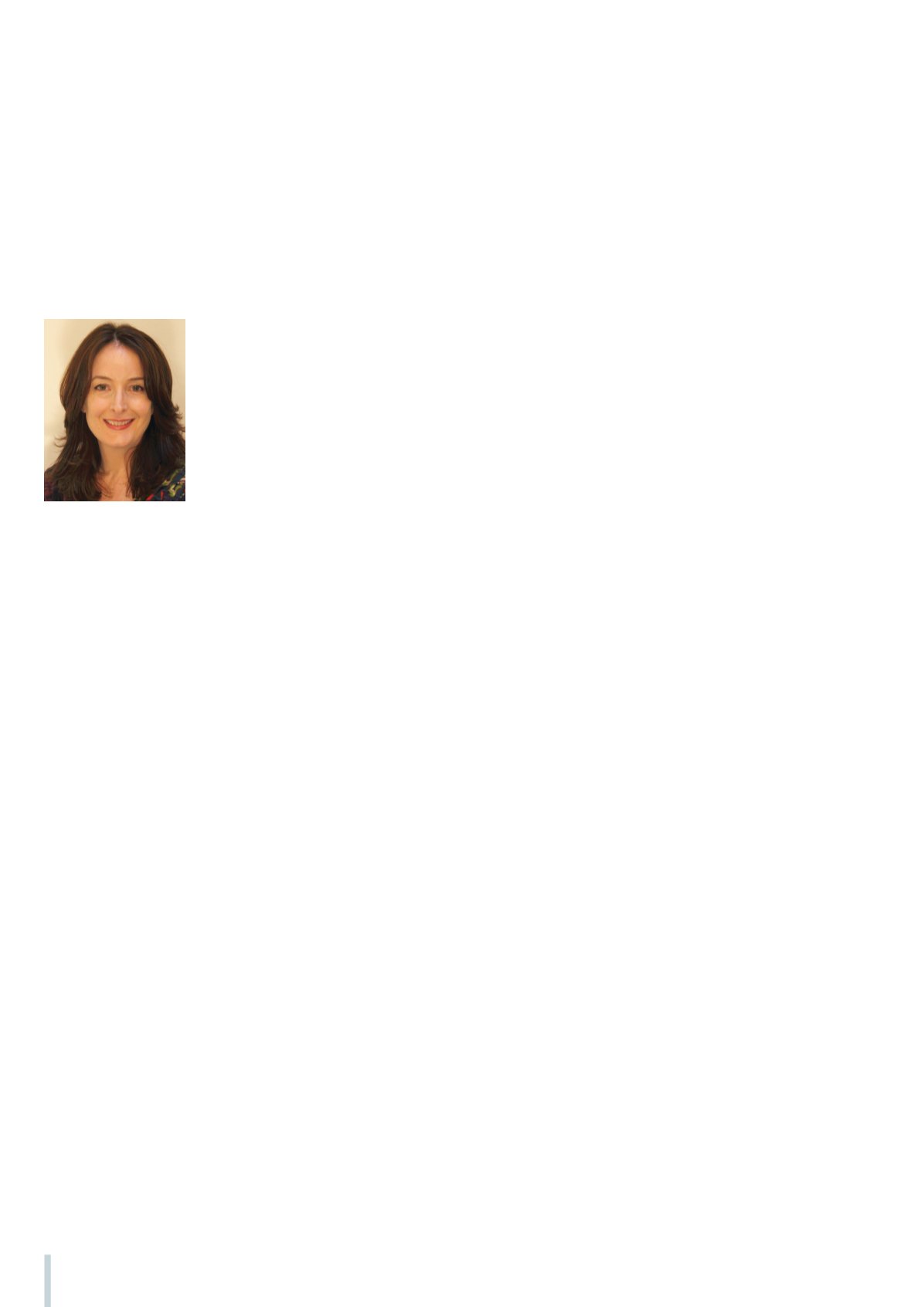
Holly Markwell
offers a valuable perspective on the debate about language
choice and its role in the perception and portrayal of dementia and behaviour
Holly Markwell is
Dementia Behaviour
Management
Advisory Services
(DBMAS) National
Network Coordinator,
Alzheimer’s Australia
(Qld). Contact her at:
h.markwell@
alzheimers.org.au.