


 35 / 40

Vol 5 No 3 June/July 2016
Australian Journal of Dementia Care
35
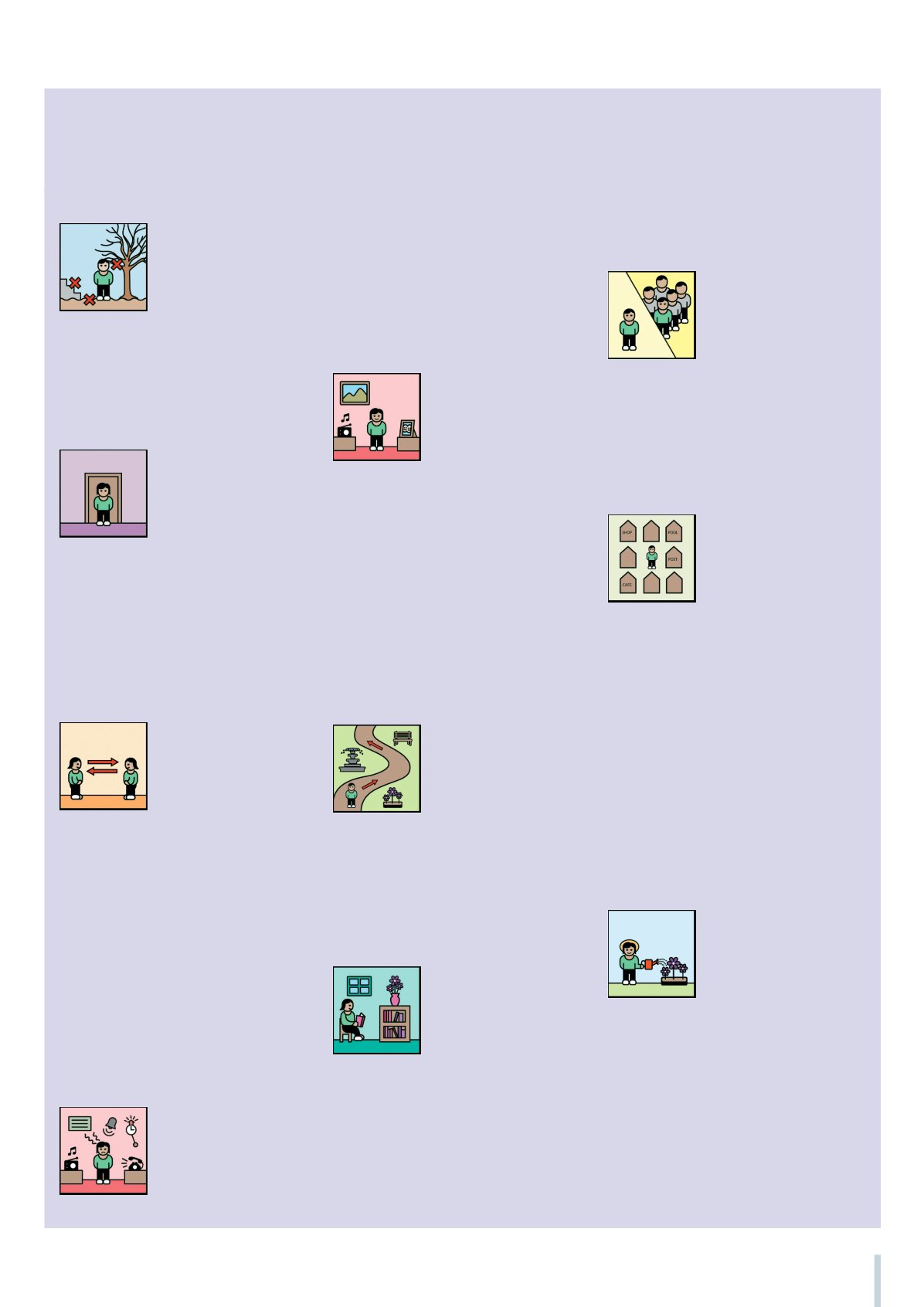
Unobtrusively reduce risks
People with dementia
require an internal and
external environment that is
safe and easy to move
around if they are to
continue to pursue their
way of life and make the most of their
abilities. Potential risks such as steps must
be removed. All safety features must be
unobtrusive as obvious safety features,
such as fences or locked doors, can lead to
frustration, agitation and anger or apathy
and depression.
Provide a human scale
The scale of a building can
affect the behaviour and
feelings of a person with
dementia. The experience
of scale is influenced by
three key factors; the
number of people that the person
encounters, the overall size of the building
and the size of the individual components
(such as doors, rooms and corridors). A
person should not be intimidated by the size
of the surroundings or confronted with a
multitude of interactions and choices.
Rather the scale should encourage a sense
of well-being and enhance the competence
of a person.
Allow people to see and be seen
The provision of an easily
understood environment
will help to minimise
confusion. It is particularly
important for people with
dementia to be able to
recognise where they are, where they have
come from and where they can go. When a
person can see key places, such as a
lounge room, dining room, their bedroom,
kitchen and an outdoor area they are more
able to make choices and see where they
want to go. Buildings that provide these
opportunities are said to have good visual
access. Good visual access opens up
opportunities for engagement and gives the
person with dementia the confidence to
explore their environment. It can also enable
staff to see residents. This reduces staff
anxiety about the residents’ welfare and
reassures the residents.
Manage levels of stimulation
Reduce unhelpful stimulation
Because dementia reduces
the ability to filter stimulation
and attend to only those
things that are important, a
person with dementia
becomes stressed by
prolonged exposure to large
amounts of stimulation. The environment
should be designed to minimise exposure to
stimuli that are not specifically helpful to the
resident, such as unnecessary or competing
noises and the sight of signs, posters,
spaces and clutter that are of no use to the
resident. The full range of senses must be
considered. Too much visual stimulation is as
stressful as too much auditory stimulation.
Enhance helpful stimulation
Enabling the person with
dementia to see, hear and
smell things that give them
cues about where they are
and what they can do, can
help to minimise their
confusion and uncertainty.
Consideration needs to be given to
providing redundant cueing, ie providing a
number of cues to the same thing,
recognising that what is meaningful to one
person will not necessarily be meaningful to
another. Using text and image in signs is a
simple way to do this. Encouraging a
person to recognise their bedroom through
the presence of furniture, the colour of the
walls, the design of a light fitting and/or the
bedspread is a more complex one. Cues
need to be carefully designed so that they
do not add to clutter and become over
stimulating.
Support movement and engagement
Purposeful movement can
increase engagement and
maintain a person’s health
and well-being. It is
encouraged by providing a
well-defined pathway, free
of obstacles and complex
decision points, that guides people past
points of interest and opportunities to
engage in activities or social interaction. The
pathway should be both internal and
external, providing an opportunity and
reason to go outside when the weather
permits.
Create a familiar space
A person with dementia is
more able to use and enjoy
spaces and objects that are
familiar to them from their
early life. The environment
should afford them the
opportunity to maintain their
competence through the use of familiar
building design (internal and external),
furniture, fittings and colours. The personal
backgrounds of the residents need to be
reflected in the environment. The
involvement of the person with dementia in
personalising the environment with their
familiar objects should be encouraged.
Provide a variety of places to be alone
or with others
In the unit
People with dementia need
to be able to choose to be
on their own or spend time
with others. This requires
the provision of a variety of
spaces in the unit, some for
quiet conversation and
some for larger groups, as well as spaces
where people can be by themselves. These
internal and external spaces should have a
variety of characters, eg a place for reading,
looking out of the window or talking, to cue
the person to engage in relevant activity and
stimulate different emotional responses.
In the community
Without constant reminders
of who they are, a person
with dementia will lose their
sense of identity. Frequent
interaction with friends and
relatives can help to
maintain that identity and
visitors should be able to drop in easily and
enjoy being in spaces that encourage
interaction. Stigma remains a problem for
people with dementia so the unit should be
designed to blend with the existing
community and not stand out as a ‘special’
unit. Where possible a ‘bridge’ should be
built between the unit and the community
by providing a space that is shared by the
community and people with dementia. A
coffee shop near the unit, for example, may
enable a person with dementia to go there
easily without needing assistance. Where
the unit is a part of a larger site, there should
be easy access around the site so people
with dementia, their families and friends can
interact with other people who live there.
Design in response to a vision for way of life
The choice of lifestyle, or
philosophy of care, will vary
between facilities. Some will
choose to focus on
engagement with the
ordinary activities of daily
living and have fully
functioning kitchens. Others will focus on
the ideas of full service and recreation, while
still others will emphasise a healthy lifestyle
or, perhaps, spiritual reflection. The way of
life offered needs to be clearly stated and
the building designed both to support it and
to make it evident to the residents and staff.
The building should be the embodiment of
the philosophy of care, constantly reminding
the staff of the values and practices that are
required while providing them with the tools
they need to do their job.
Principles to guide the design of physical environments
for people with dementia in residential aged care
– Richard Fleming and Kirsty Bennett