


 39 / 52

P A G E 3 7
R E I Q J O U R N A L
| J U N E 2 0 1 6
Z O N E F O C U S
Demand
Demand for inner city apartments
has come from local owner occupiers,
including baby boomers/downsizers
and young childless couples, as well
as interstate and foreign investors. At
time of writing property developers
appears to still seeing value in
investing in Brisbane inner-city
medium and high-density projects.
One reason Brisbane is attractive
for investors is its comparative
affordability compared with Sydney
and Melbourne. For the 12 months
to January 2016, Sydney apartments
were about 40 per cent more
expensive than Brisbane apartments,
while Melbourne apartments were
priced about 16 per cent higher than
Brisbane apartments.
However, demand is also impacted by
the fiscal environment and demand
from foreign investors could fall
following recent tightening of lending
criteria and lending bans from some
financial institutions. A recent
Property
Insights
report from the Commonwealth
Bank of Australia listed Brisbane as
one of the cities where developers may
consider using the residential site for
alternative projects in the commercial
property sector.
Median sale price and listing volumes
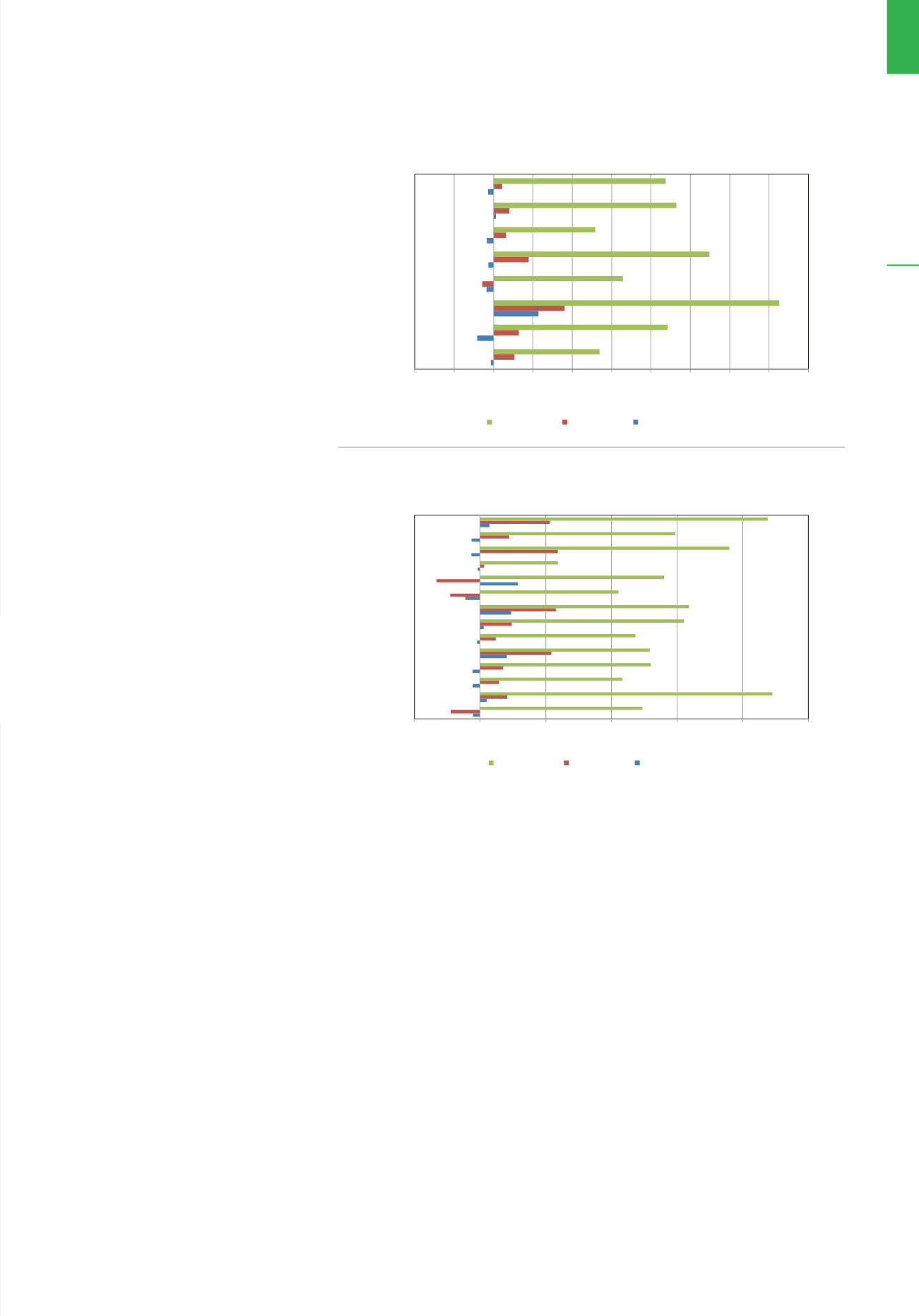
An analysis of 35 suburbs in the
Brisbane inner city market indicates
that about half of the suburbs
reported a fall in the January 2016
median sale price over the past 12
months. The suburbs experiencing
a greater decrease in the median
sale price were Ashgrove, Norman
Park, East Brisbane, Newmarket and
Fortitude Valley.
Hendra, Bowen Hills and Brisbane
City reported a minor fall of less than
1 per cent over 12 months. Suburbs
such as Paddington, Newstead,
Highgate Hill, Balmoral and
Hamilton reported a solid increase
in the median sale price for the 12
months to January 2016.
Over five years to January 2016,
only Newstead, Newmarket, Albion,
Bardon, East Brisbane and Kangaroo
Point reported a fall in the median sale
price of apartments and townhouses.
However, over a 10-year period, all
suburbs reported a cumulative increase
of between 25 per cent and 89 per cent.
The increase in the number of
medium and high-density residential
listings (apartments, townhouses,
semi-detached) in inner-city Brisbane
also reflects the boom in the sector
and the level of activity of the
apartment market.
Over the past 12 months to January
2016, only 12 out of 35 suburbs reported
a fall in the number of listings. In
some instances, falls in suburbs such
as Ascot, Newmarket, Newstead,
Bowen Hills, Windsor, Wooloowin
and Ashgrove, appears to be a market
correction to reduce oversupply.
Over a five-year period to January
2016, the number of listings has
doubled in Brisbane City, Hamilton,
Albion and Newstead.
-2%
2%
-2%
-2%
8%
-1%
1%
9%
-4%
12%
-1%
-3%
-3%
3%
-9%
8%
6%
7%
22%
5%
10%
23%
-9%
-13%
1%
24%
9%
21%
49%
89%
43%
52%
52%
47%
62%
64%
42%
56%
24%
76%
59%
88%
-20%
0%
20%
40%
60%
80%
100%
Albion
Alderley
Ascot
Clayfield
Hamilton
Hendra
Kelvin Grove
Herston
Newmarket
Newstead
Bowen Hills
Windsor
Wooloowin
Lutwyche
EŽƌƚŚ /ŶŶĞƌ ƌŝƐďĂŶĞ
DĞĚŝĂŶ WƌŝĐĞ ŚĂŶŐĞ ďLJ ƐƵďƵƌď
10-year change 5-year change 1-year change
Source: RP Data - Scorecard - Median Sale Pice over a 12 months rolling period to January 2016
-1%
-4%
11%
-2%
-1%
-2%
1%
-1%
5%
6%
18%
-3%
9%
3%
4%
2%
27%
44%
73%
33%
55%
26%
46%
44%
-20% -10% 0% 10% 20% 30% 40% 50% 60% 70% 80%
Brisbane City
Fortitude Valley
Highgate Hill
Kangaroo Point
New Farm
South Brisbane
Spring Hill
West End
ƌŝƐďĂŶĞ /ŶŶĞƌ
DĞĚŝĂŶ WƌŝĐĞ ŚĂŶŐĞ ďLJ ƐƵďƵƌď
10-year change 5-year change 1-year change
Source: RP Data - Scorecard -Median SalePice over a 12 months rolling period to January 2016