


 163 / 216

159
Copyright © 3P Learning – These resources have been created in partnership with Dr. Marian Small.
For more information visit
www.mathletics.comQuestions to facilitate the learning
•
Did both of the numbers have to be decimal hundredths or not?
•
When you add the numbers, can the sum be more than 3.28?
•
Could you have added and subtracted 5? Why or why not?
•
Could you have added and subtracted more than 5 or less than 5?
•
Could the first number be big? small? What are your choices?
Scaffolding the learning
•
Suppose the first number was 1. What might you try for the second number? Would you be able to
subtract that amount?
•
How could you use the hundredths grids to add and subtract your decimals?
•
How could you use a number line?
What’s the point of this task?
Solving this problem will provide students with lots of practice adding and subtracting decimals, but will
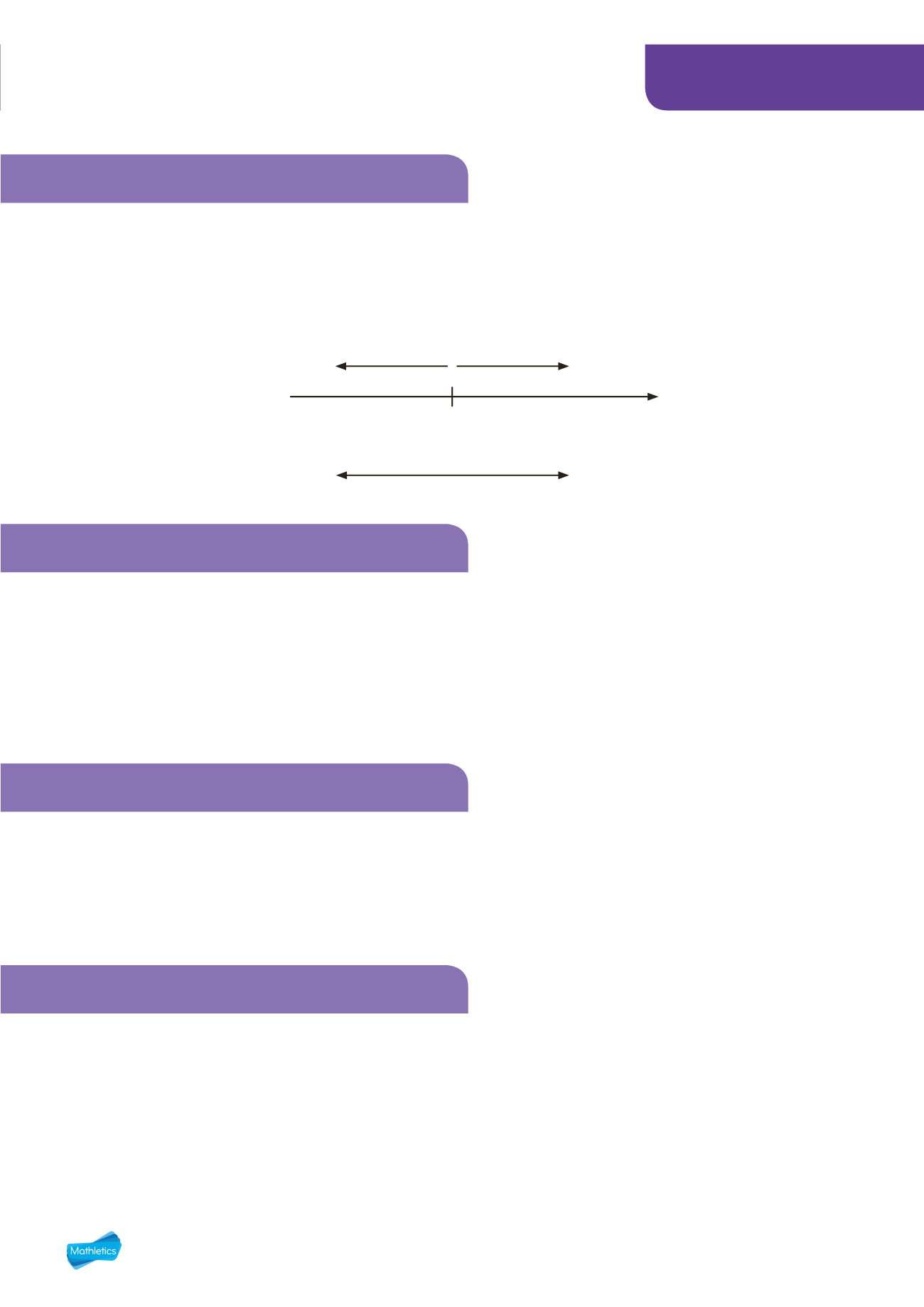
also lead to a surprising conclusion—the first number is irrelevant, but the second number has to be 1.64.
Some students will guess and test to solve the problem, but some might use a simple number line
diagram and note that this is what has to happen:
Extending the learning
Adjust the problem to: There are two decimal numbers. If you double the first one and add the second
one, you get 4.93; if you double the second one and add the first one, you get 6.77. What might the
numbers be?
Add and Subtract
Second
number
Second
number
3.28
First
number
Number