


 19 / 32

19
of the remainder of the aircraft was melted down for the
aluminium.
The aircraft skin was duralium or duralumin, an
aluminium alloy much used in the aircraft industry and,
after the war, for the bodies of Land Rovers. The
material looked useful to Colin Lonsdale and a
Vengeance wing was "liberated" by his brother-in-law,
one Albie Coyle, who was building the bulldozers.
Having achieved the "slipping out the back door" of the
wing, its component parts were used by Lonsdale to
build the frame and body of the car.
In case you wondered about the coincidence of the
names, Albie was current car owner Larry's father.
Lonsdale invested in a new fangled electric arc welder
to put the car together. The welding was performed by Colin Beilken, recognised as Kalgoorlie's
best fabrication engineer.
The Car
Power for the car as originally built was provided by a 1946
Triumph T100 500 cc twin, which was replaced by a larger
engine after one season to compete in the 1 litre division. The
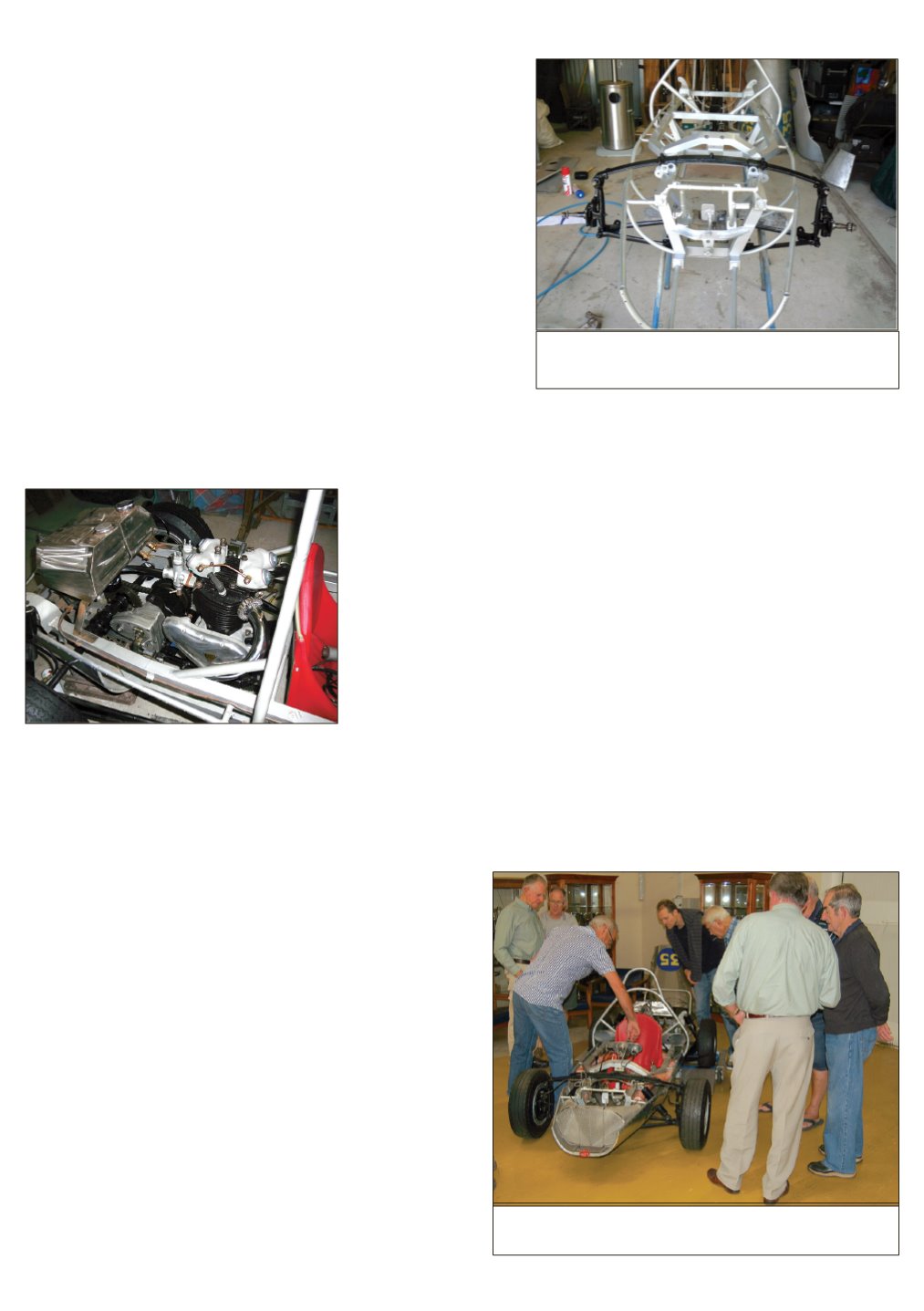
current engine (left) harks back to those early days and is a
modified 1951 6T Triumph 650. The carburettors are twin
Amal Type 76 with a remote shared float chamber. These
carburettors are quite rare and are difficult to tune. The set on
the Lonsdale were cast by C L East Restorations in the UK.
The gearbox is an Albion 4-speed close ratio box from a 1939
Excelsior Manxman. It is an extremely rare box made for
racing motorcycles. As motorcycle races were generally bump-start events until fairly recent
times, these racing boxes had no kick-start facility. The primary drive to the gearbox and the
secondary drive to the axle were both by chain.
Steering is by a 1939 Ford Prefect (E93A) steering box, modified to suit.
The suspension at the front is the familiar Fiat Topolino independent suspension by transverse
leaf spring and lower wishbone as used by Cooper
(at both ends) and many others including WA's
Wally Higgs. The rear is a swinging half axle set-up
with adjustment to provide positive camber on the
right rear wheel for dirt track racing (TQs raced
clockwise in the early days). The rear was sprung
by concealed spring units from Triumph or BSA
motorcycle suspension. Trailing arms located the
half-axles fore and aft with Fiat hubs.
Body and chassis were constructed from the
Vengeance wing parts with a duralium skin. The
body shape was more aerodynamic than the
average TQ, which might have made the long nose
somewhat vulnerable in speedway racing.
Stopping was taken care of by hydraulic drums off
Larry explains the quick release steering
wheel attachment to VSCC members
The restored frame, showing the Fiat
Topolino front suspension