


 33 / 40

Vol 5 No 6 December 2016/January 2017
Australian Journal of Dementia Care
33
T
here is an increasing body of research
knowledge and literature that
describes how new interventions and
ways of working can improve the quality
of life and quality of care for people living
with dementia. Frustratingly, it is rarely
accompanied by guidance that describes
the ‘how to’ aspect of applying this new
knowledge into practice within the
workplace. What’s more, there are a
number of obstacles to implementing
practice change, which include lack of
time and resources as well as staff who
have little confidence in planning,
implementing and evaluating the transfer
of evidence into practice.
Knowledge translation (KT) is an
approach that addresses the gap between
producing new evidence and applying it
into practice. Dementia TrainingAustralia
(DTA) uses a KT framework (Phillipson
et
al
2014) to build capacity in the aged care
industry for
applying what we know
from
research
to what we do
in practice to
support and care for people living with
dementia.
Improving practice
and quality of care
Amongst the range of programs and
resources offered by DTA is a Fellowship
Program, created by Dr Margaret Winbolt
(DTADirector based at La Trobe
University, Melbourne).The Fellowship
program aims to raise staff awareness of
current best evidence in dementia care,
establish care teams who are prepared to
work in newways to provide quality care
to those they support, and gives the
nominated Fellows access to a vast range
of knowledge resources to promote active
learning and uptake of key knowledge
and skills.
In addition, the Fellows are allocated a
DTAmentor to support and advise them
as they undertake the year-long practice
improvement project.
The DTAFellowship Program is based
on the program offered by the former
Dementia Training Study Centres
(DTSCs). In the past five years over 50
practice improvement projects were
undertaken across Australia as part of that
program. Notable projects include: the
introduction of the Namaste program in a
residential care facility, which resulted in a
significant reduction of responsive
behaviours and decrease in weight loss of
residents; and development and
introduction of a sexuality policy,
guidelines and suite of forms, backed by
education, to encourage a shift in staff
attitudes and knowledge about sexuality,
enabling participants to gain confidence in
supporting the expression of sexuality in
residents living with dementia.
Continuous evaluation of the Fellowship
Program has established that the following
are effective in facilitating knowledge
transfer and practice improvement in the
care of people with dementia:
• Organisational support and aligning the
project to strategic direction.
• The presence of a workplace leader.
• Support from topic experts.
•Monthly contact with mentors.
• Access to a full range of resources.
A limited number of DTAFellowships
will be offered to organisations receiving
DTATailored Training Packages to
support the implementation of knowledge
gained into practice.
Reference
Phillipson L, Fleming R, Beattie E, Winbolt M, Reis
S (2014) Development of an evidence-based
framework to support knowledge translation
within the Australian Dementia Training and Study
Program.
Australian Journal of Dementia Care
3(5) 32.
Christine While is a Training Consultant with
Dementia Training Australia, and Research Fellow
with the Australian Centre for Evidence Based
Care, La Trobe University, Melbourne. Contact
Christine at:
c.while@latrobe.edu.auNew acute care eLearning course
Dementia-specific education for the acute care workforce can now
be easily accessed through an online course developed by the
former Dementia Training Study Centres, now Dementia Training
Australia (DTA).
The View From Here: Skills in Dementia Care for Acute Settings is a
flexible, evidence-based learning course. It was designed to help nurses
and other health professionals develop the knowledge and practice skills
they need to care for people with dementia in hospitals.
The course offers self-paced learning and a certificate of completion
to obtain CPD recognition. The nine topics include: activity in the
acute care setting; environment- sensory, physical, social; approaches to pain; and
delirium and dementia.
The name of the course refers to the fact that the program uses the
patient’s perspective
to
underscore the experience, and therefore the specific needs that may arise for a person with
dementia when they find themselves in the unfamiliar environment of a hospital.
The View From Here is currently being trialled in a number of Queensland hospitals before
being launched on the new DTA website at
www.dementiatrainingaustralia.com.au.For
further information about how to access the course now, email
DTA@qut.edu.au– Sandra Jeavons, Program Manager, Dementia Training Australia, Queensland University
of Technology
Fellowships to help care teams
put knowledge into practice
DTA’s Fellowship Program is designed to support teams to work in new ways to
provide quality, best-evidence care to people with dementia.
Christine While
reports
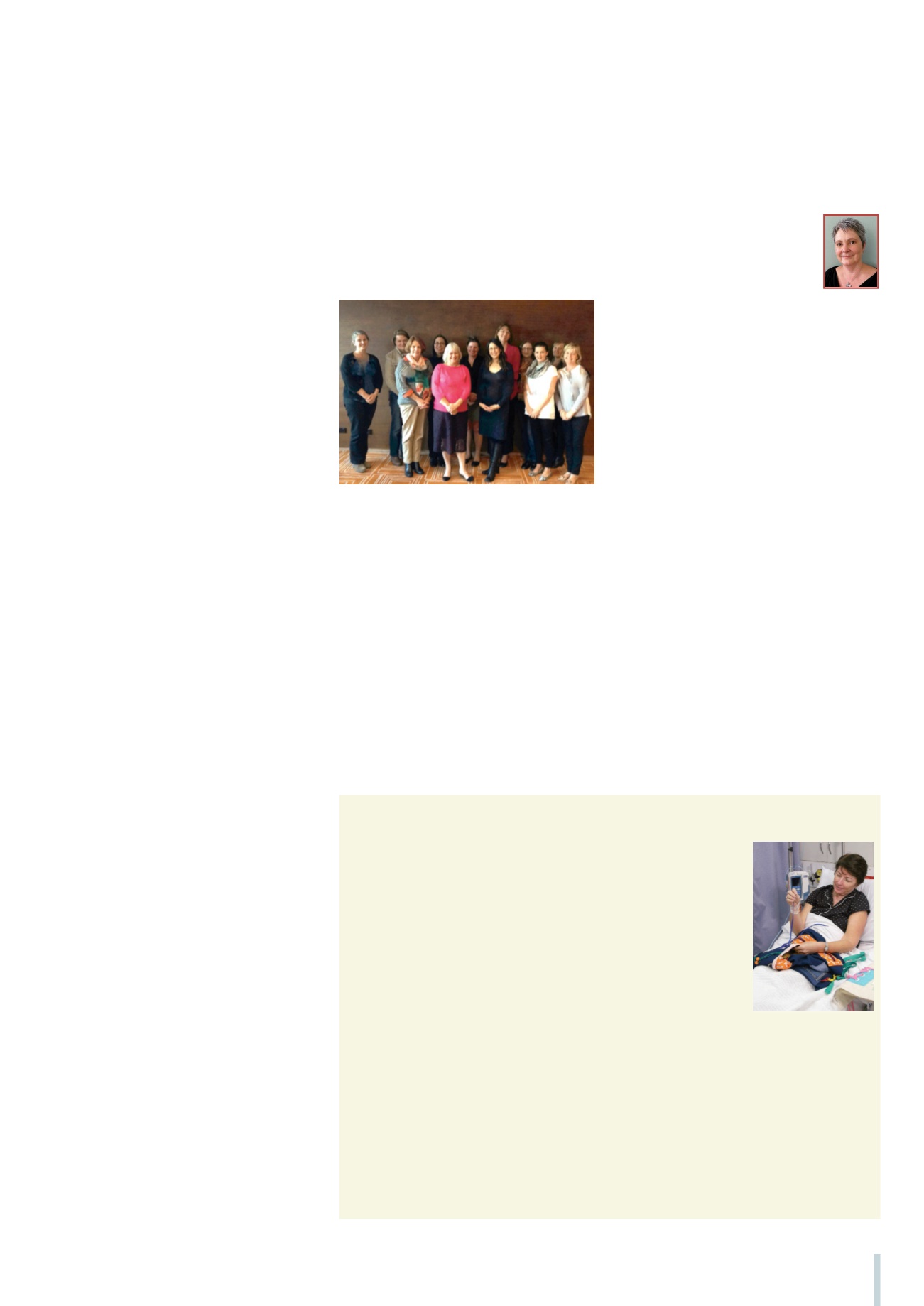
Some of the 2015 DTSC Fellows marking
the commencement of their Fellowships