


 35 / 40

Vol 5 No 6 December 2016/January 2017
Australian Journal of Dementia Care
35
support specific approaches to dementia
care. For example, alongside provision of
DBMAS and SBRT in the Northern
Territory and the Top End, ARRCS’
expertise in providing dementia care for
Aboriginal and Torres Strait Islander
people will benefit and inform service
provisionAustralia-wide.
Likewise, the Victorian-based
Wintringham’s expertise in providing
dementia care and support for older
people experiencing homelessness and
related complex needs will be invaluable
across the DSAnational network.
Clinical and consultancy appointments
DSAhas appointed a cohort of
experienced dementia consultants and
clinicians nationally. They claimmore than
6000 years of dementia care experience
between them. Two key DSA
appointments include Dr Susan Hunt,
who has been well known to many in the
aged care sector as anAssistant Secretary
with the Department of Health and the
Senior Nurse Advisor, Ageing andAged
Care.
Dr Hunt will head Clinical Governance
for DSA, and she is joined by another key
appointment, Associate Professor Stephen
Macfarlane, a highly regarded
psychogeriatrician who will head Clinical
Services.
Their appointment, along with
dementia consultants who have a range of
experience working in urban and rural
Australia, ensures a robust, highly skilled
clinical platform for DBMAS and SBRT.
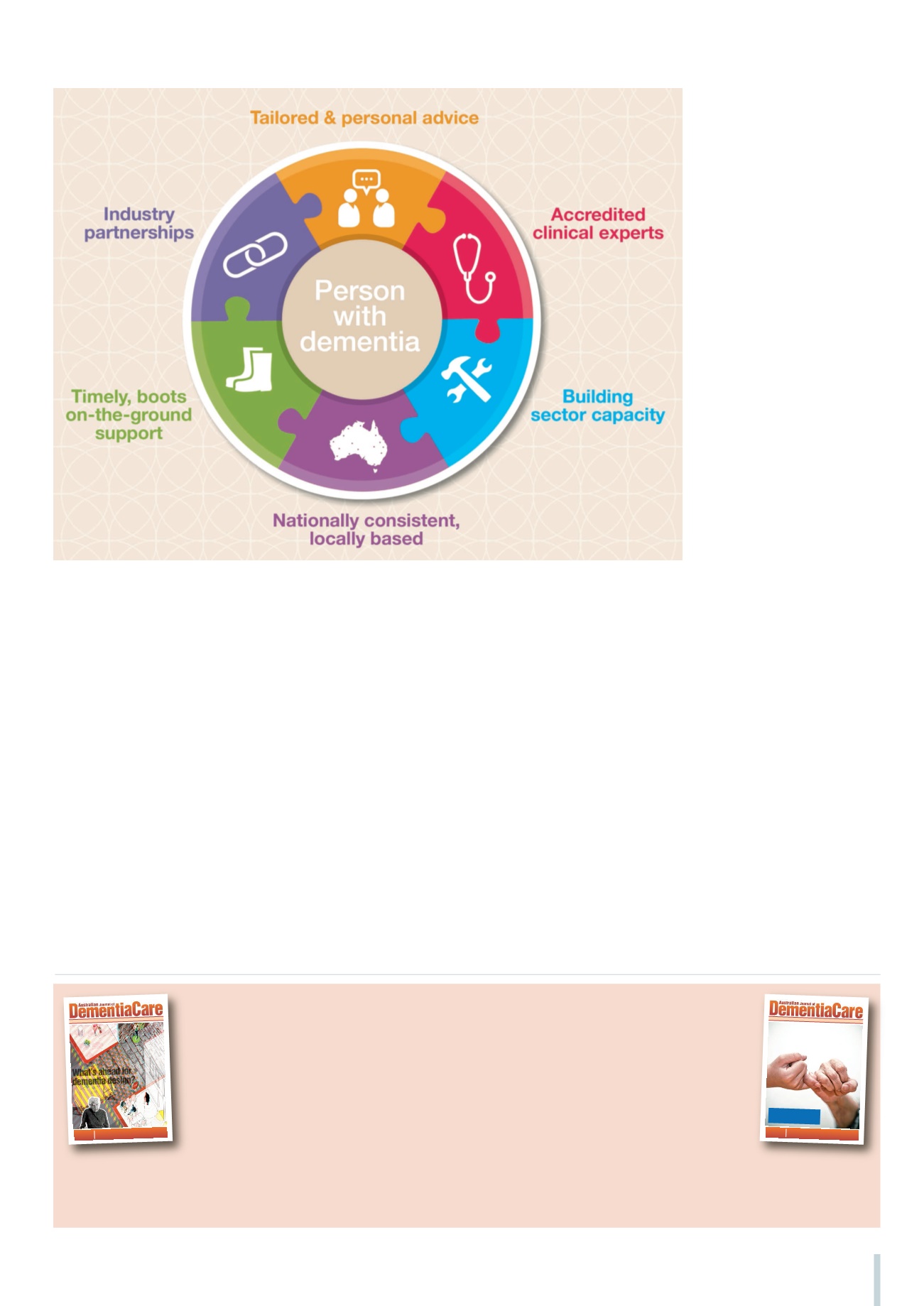
Nationally consistent, local presence
DSA is the gateway to both DBMAS and
SBRT, providing an approach that allows
for national consistency, local presence and
tailored individual service. Overseas
interest inAustralia's national dementia
support approach began with the
implementation of SBRT and
has continued with the
national DBMAS.
Australia continues to be a
leader in the development of
responsive, capacity- building
dementia care services with
nothing similar yet available
in the rest of the world.
This means the work of
DSA, and DTA, could well
become a model for service
development internationally.
DBMAS provides clinical
and psychosocial input to
teams or individuals caring
for a person with dementia
who require support with
behavioural and
psychological symptoms. It
supports staff and carers in
community, residential, acute
and primary care settings with
information, advice,
assessment and short-term
case management
interventions.
SBRT provides support
more specifically for aged care residents
who are experiencing severe and extreme
behavioural and psychological symptoms.
When aged care providers contact DSA to
request assistance, trained consultants will
identify cases needing SBRT support.
In this way, DSA is able to offer seamless
service delivery across DBMAS and SBRT.
It is believed that as DBMAS is able to
proactively provide support before
situations reach a crisis point, that this may
reduce escalation.
On the ground, expert, local
Bringing DBMAS and SBRT under the
name Dementia Support Australia
highlights that the chief function of these
services is to be truly and effectively
supportive. To achieve this, DSAplans to
deliver the new national DBMAS with the
same commitment to ‘showing up’ as seen
in the effective roll-out of SBRT. This
means:
DSA’s national service
delivery model
Advertise with
AJDC
Limited offer
PRINT AND WEB PACKAGE DEAL
Free
AJDC
website advert with every print ad in the
Australian Journal of Dementia Care
Download the AJDC Media Kit at
www.journalofdementiacare.comor contact Managing Editor Kerry Schelks at
kerry@australianjdc.comForallwhoworkwithpeoplewithdementia
Vol5No3June/July2016
Also inside
this issue:
Supportingresidentstovote Creatingpositivecarecultures
Loadedmeanings: thenarrativeofbehaviour
What’s ahead for
dementia design?
Forallwhoworkwithpeoplewithdementia
Vol5No4August/September2016
Also inside
this issue:
Rethinkingrespite Prisonersanddementia
TestingAlzheimer’srisk Successfulcarercoaching
You are not alone
DEMENTIAAWARENESSMONTH
SPECIAL ISSUE
Featuringashowcaseof theworkof theDementia
CollaborativeResearchCentres:startsp17