


 32 / 64

Quality Training
32
Inside News
Examination and Assessment Review
Highly successful planning days considered recommendations
and strategy for renewal of our training programs
In early February, the College held
Specialty Training planning days for
both clinical radiology and radiation
oncology. In total, these events brought
together over 70 dedicated clinicians
who contribute to the College through
governance and education, including
Board members, office bearers, committee
members, examiners, directors of training
(DoTs) and trainees. Attendees discussed
the current strengths and challenges of
their respective Faculty’s Specialty Training
programs, and considered the College’s
strategy for their continued improvement
and renewal over the next few years.
The Faculty Deans, Prof John Slavotinek
and Dr Dion Forstner led their respective
days, with support from the Chief Censors
A/Prof Dinesh Varma and
A/Prof Margot Lehman. The discussions
were informed by presentations from
Emeritus Professor David Prideaux of
Flinders University and Dr Jacob Pearce
and Mr Daniel Urbach of the Australian
Council for Educational Research (ACER).
As many members will be aware, Prof
Prideaux and the ACER team conducted
a full review of the College’s assessment
and examination processes for Fellowship
training in 2015, involving extensive
consultation with College stakeholders and
thorough observation and analysis of our
examination and assessment processes.
Prof Prideaux presented his findings on
the alignment of the assessment programs
to their respective curricula, and made
recommendations for the adoption
of a more programmatic approach to
assessment. The concept of programmatic
assessment is at the leading edge of
contemporary approaches in medical
education, and allows for a more holistic
and progressive system for assessment
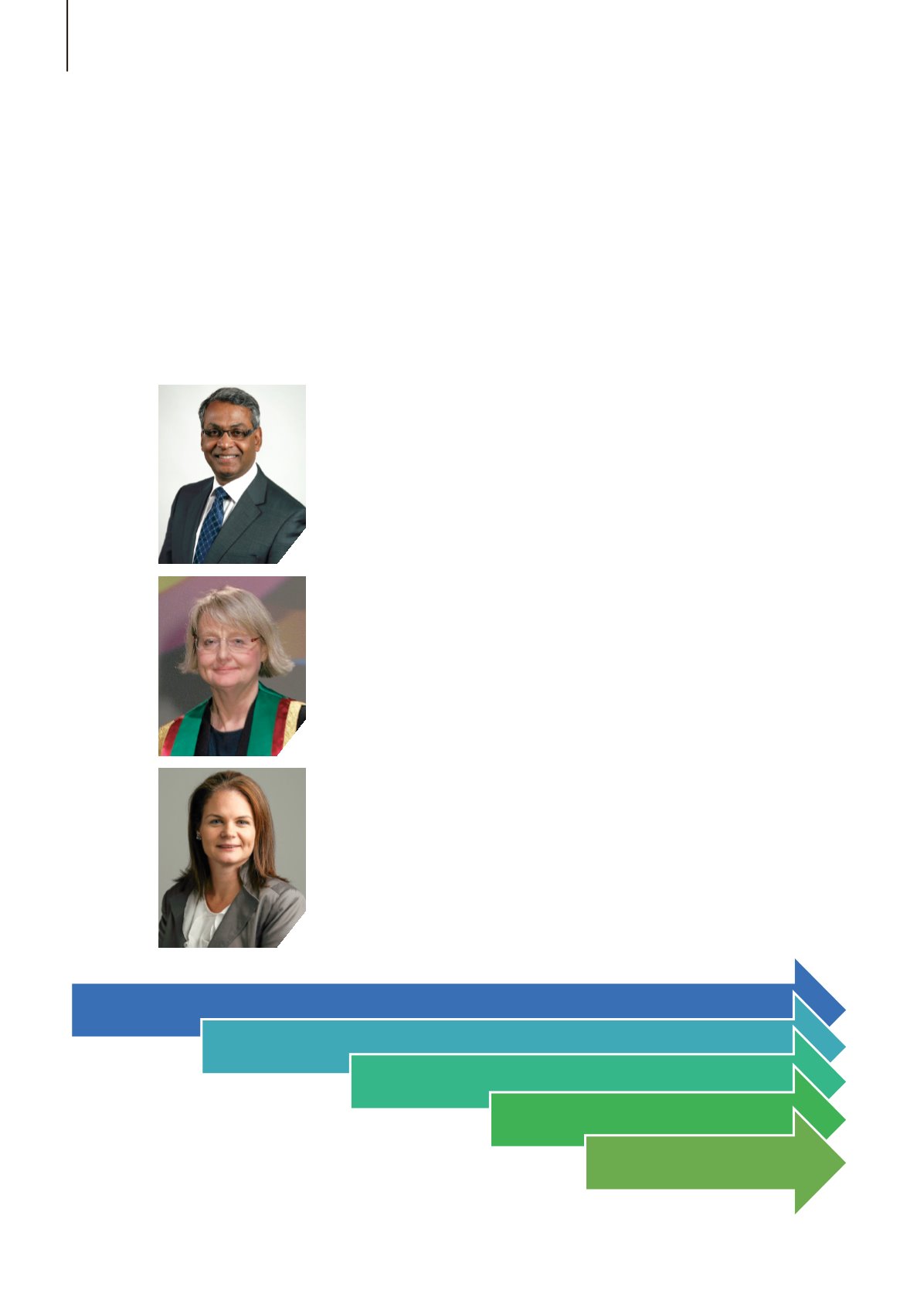
of competency in trainees. See diagram
below.
Prof Prideaux made recommendations
for improvements to the workflows
and structures of the educational
sub-committees, aimed at enhancing
the College’s capacity for ongoing
improvement and providing greater
support to the Chief Censors and other
key clinicians.
ACER’s findings focused on
recommendations to enhance the
systems and processes used in the
various barrier examinations, increasing
their efficiency and providing greater
ability to gather and interpret useful
information. ACER took attendees
through a textbook example of a robust
examination cycle, as illustrated on
Page 33, and made recommendations to
bring the College into line with
this model.
A/Prof Dinesh
Varma
A/Prof Margot
Lehman
Pamela Taylor
Programmatic Assessment Model
Define skills and competencies as measurable learning outcomes
Identify specific assessment criteria for each learning outcome
Map assessment tools (exams & work-based) to assessment criteria
Use tools to collect progressive assessment
data for each trainee
Analyse assessment data to
evaluate trainee competency