



 52 / 66

50
7.9.2 Frequency of clinical management issues
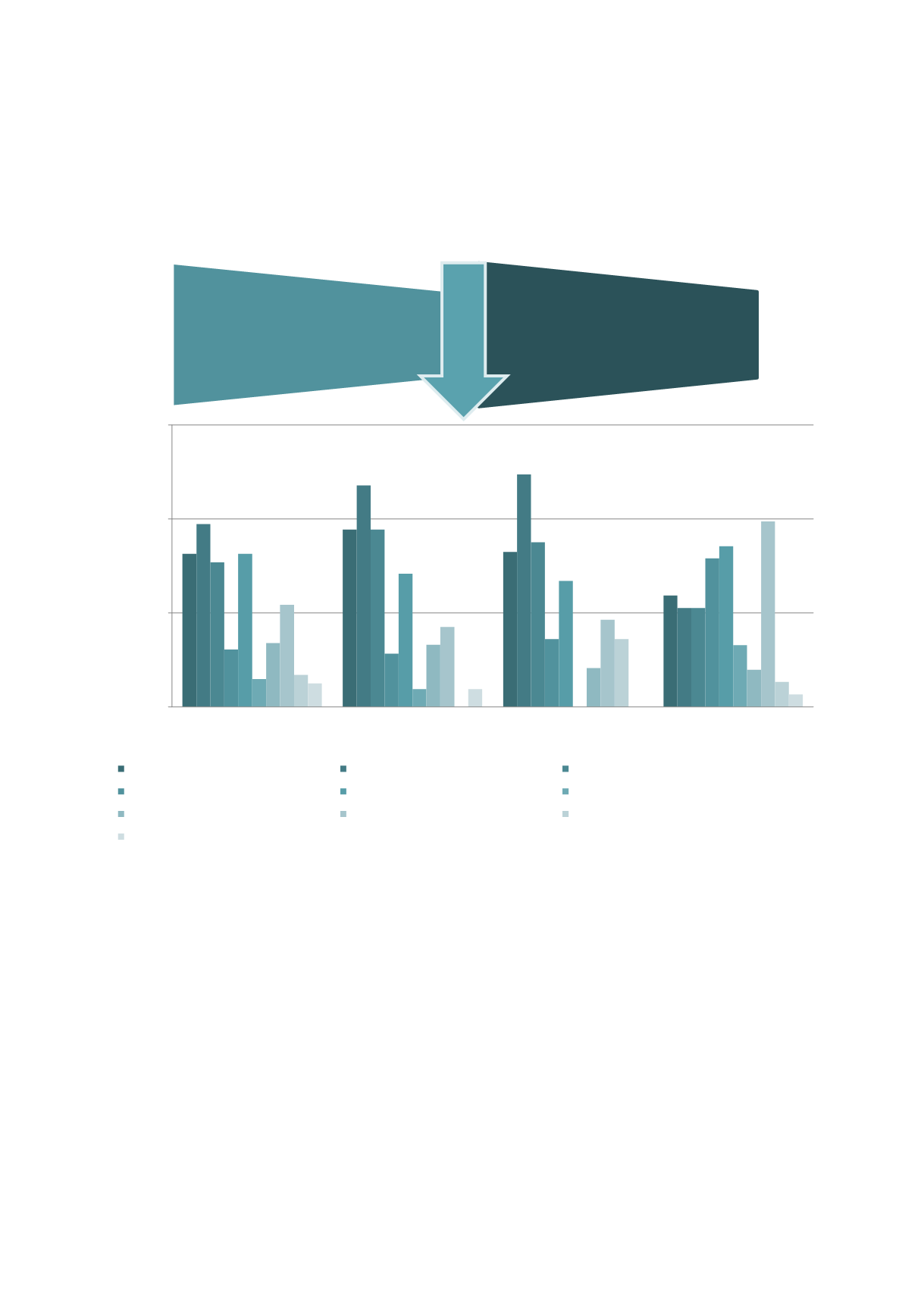
The frequency of specific clinical issues of management is shown in Figures 31 and 32. Figure 31 outlines the
trending of clinical management issues outlined by second-line assessors across the audit period, focussing on issues
identified as areas of concern or adverse events. If an assessor flags an area of concern or adverse event it implies
significant criticism. Figure 32 focuses specifically on clinical management issues identified by the assessor as being
preventable. The higher the frequency, the greater the requirement for implementing strategies to improve surgical
care in that particular clinical area.
Figure 31: Trends in areas of concern and adverse events in second-line assessments.
Note: total n=777 clinical management issues identified as an adverse event or area of concern in 1,052 second-line assessments.
Audit period 1 July 2007 to 30 June 2015.
More than one clinical management issue can be attributed to a case.
The clinical issues were re-categorised as detailed in the 2015 VASM Technical report.
Comments:
•
Delay issues 18.7% (145/777), operative management issues 15.2% (118/777), postoperative care issues
15.2% (118/777) and preoperative care issue 14.9% (116/777) were the most common clinical issues
identified.
•
There was a significant fall in delay issues between 2007-2012 (19.5%) and 2014-2015 (10.5%) (p<0.001).
Preoperative care issues also fell, from 15.4% in 2007-2008 to 10.5% in 2014-2015.
•
Serious clinical management issues had been identified in 19.7% cases in 2014-2015. These incidences
include organ injury, perforation of organs, dislodged clots, perioperative haemorrhage, anastomotic leaks
after operations and deep wound dehiscence. There was an increase in serious clinical management issues
from 2007-2012 8.1% (38/569) to 11.1% (9/82) in 2014-2015, and the attributable trend and cause will be
monitored closely by VASM and reported on in future reports.
•
Protocol issues in 2007-2012 rose from 6.8% (46/569) to 15.8% (14/82) in 2014-2015.
•
The delay issues category includes delays in transfer, establishing diagnosis and starting treatment. A number
of studies on hip fracture patients found that delay to surgery was attributable to patient factors such as
0%
10%
20%
30%
2007-2012
2012-2013
2013-2014
2014-2015
Adverse events or areas of concern (%)
Audit period
Operative management issues
Delay issues
Preoperative care issues
Protocol issues
Postoperative care issues
General complications of surgery
Communication or poor documentation Serious clinical management events Anaesthetic or critical care issues
Septicaemia and wound
17.2%
Operative management issues
2007-2014
11.8%
Operative management issues
2014-2015