



 22 / 40

22
Australian Journal of Dementia Care
December 2016/January 2017 Vol 5 No 6
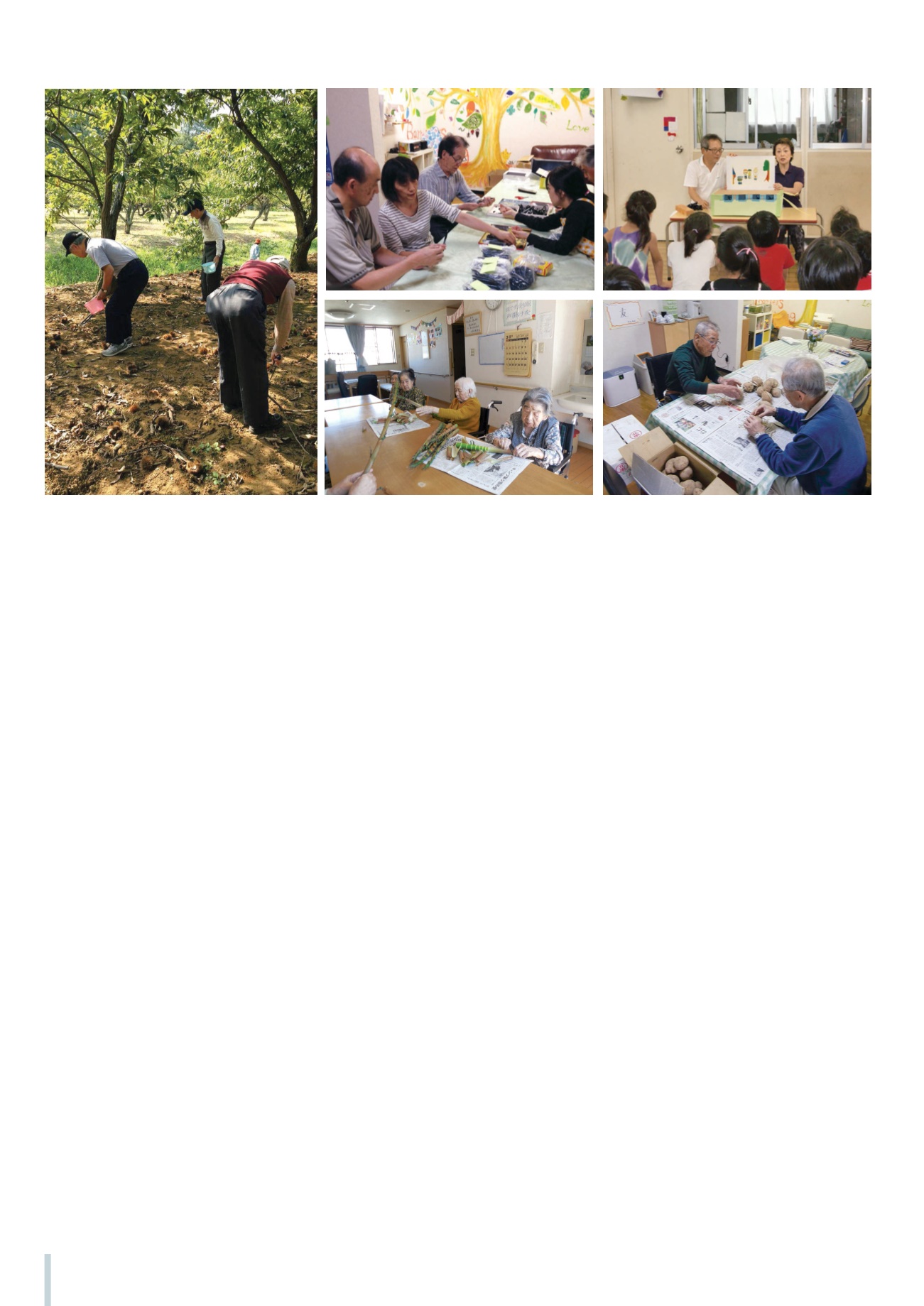
Clockwise from left
above:
• Susuma Suzuki (right)
and Teruhiko Fujiwara,
who have dementia,
pick chestnuts in the
forest near DAYS BLG.
• Yuriko Murata, staff
member at DAYS BLG
(second from left),
working to package
pens for local
businesses with Kinya
Sugimoto (left) and
Akira Terao, who have
dementia. Looking on is
Yunjeong Jang (right), a
student visiting from
South Korea.
• School projects:
Volunteer Atsuko Sato
(right) helps a DAYS
BLG member Koichi
Oku raise awareness of
dementia at a school,
using storyboard cards.
• DAYS BLG members
prepare potatoes for
businesses in the
locality.
• Preparing vegetables
in a residential group
home for people with
dementia are residents
Kiyo Takase (right),
Sayoko Ninomiya
(middle) and Akiko
Takata.
service users were indistinguishable, as everyone
was working on a shared activity.
After a few hours the group came together and
opened a kiosk for schoolchildren to purchase
products on their way home. Mr Maeda discussed
the importance of interacting with the local
residents for creating dementia-friendly
communities. Other methods they had of engaging
local people included market stalls and visiting
local schools to talk about dementia. Aman, fluent
in English having worked in Los Angeles for a few
years, translated and told a story they share with
schoolchildren using storyboard cards. It was a
moving story about a woman living with dementia,
and he finished on a personal note by saying that,
although he himself had dementia, “this is not to
say I can’t enjoy my life and have new experiences”.
The day concluded with tea and cake, and each
member of the group reflected on how they felt the
day’s activities went, sharing new ideas for the
project.
Evaluating the projects
Strengths
When visiting these projects, it appeared all
members were enthusiastic and motivated to take
part (see box overleaf). Engaging in meaningful,
work-related activities and contributing to the
development of the projects seemed important. As
stated by Masahiko Sato, a Japanese spokesperson
with young onset dementia:
“I hope to contribute to society by participating in
volunteer activities. I want others to understand that
people with dementia are not a burden on society. People
with dementia are not simply people who need to be taken
care of.”
People with dementia in the UK have expressed
similar concerns. For example, Harris and Keady
(2009) identified themes of loss, fear and
abandonment for younger people with dementia.
As someone says in that paper: “I lost everything
that defined me as a productive and meaningful
man when I had to stop working because of my
symptoms” (p3). People diagnosed with dementia
are not only dealing with a progressive decline in
functioning due to their diagnosis but also
negotiating their sense of identity and self over time
(Beard & Fox 2008). For some, a strong work ethic
may be important; therefore, social projects may be
one way of enabling people with dementia to
maintain their identity.
Key issues
Social projects are not without issues. People who
take part should have a role in deciding how
revenue is used, which may be difficult given the
cognitive impairment associated with dementia.
Activities should also be carefully chosen around
people’s interests, without posing unnecessary
challenges. From the two projects I visited, it
appeared that focusing on enjoyment of the activity
rather than on goal-directed outcomes made it
stress-free. However, meeting required outputs for
local businesses could have the opposite effect and
result in stress.
It is unknown howwidespread these
community-led projects are throughout Japan and
there is a lack of research to evaluate their
effectiveness. As Mr Wakano says: “There were a lot
of people who could not wait for the national
approaches. So we started fromwhat we could do
by ourselves”. What he describes as an “advanced
grass roots movement” has triggered other small-
scale activities across Japan, but there is little data
on them. There is anecdotal evidence, however, that
they are in demand: Mr Maeda informed me there
is a waiting list of approximately 50 people for the
DAYS BLG project in Machida.
Applicability to other countries
Current services
Many projects for people living with dementia
already acknowledge the importance of providing
opportunities for meaningful activities. ‘Men in