


 7 / 40

Vol 5 No 6 December 2016/January 2017
Australian Journal of Dementia Care
7
V
alentine’s Day 2017 will
mark the start of
Australia’s first
symposiumon dementia and
love, in Ballarat, Victoria. The
idea for the two-day
symposium came frompeople
living with dementia and their
families who were invited to
speak at a workshop I was
planning on dementia and
sexuality. Their feedback was
that the focus on sexuality is
often reductionist, or limited to
sex, and they wanted the
opportunity to talk about
sexuality in broader ways that
included intimacy and love.
And so the idea for the dementia
and love symposiumwas born.
Small Acts of Love: National
Symposiumon Dementia and
Love will explore the
importance of love in the lives of
people living with dementia.
Love will be broadly defined to
encompass intimate
relationships, children,
grandchildren, parents,
neighbours, pets – the people
and things that are loved.
The focus on love is strategic.
It is underpinned by the
National
framework for action on dementia
2015-2019
(Department of
Health 2015) and the
Guide to
becoming a dementia-friendly
community,
developed by
Alzheimer’sAustralia NSW
(2014). Both documents
highlight that people living with
dementia need to be valued and
respected and have the right to
choice, dignity and quality of life
withmeaning, purpose and
value. These principles are
important – but howdo we
engage service providers and
communitymembers in
enacting them?
Turning things around
While there are early adopters
who support the principles, we
clearly still have a long way to
go. In a survey conducted by
Alzheimer’sAustralia in 2014,
people living with dementia
said they want support to
continue to live well and be
involved in the things they
enjoyed before diagnosis, but
that they feel socially isolated
and that people avoid spending
time with thembecause of their
diagnosis of dementia. At the
very time when people living
with dementia need us the most,
many walk away.
We need to turn this around.
We need to findways of
engaging communitymembers
and service providers inmaking
connections with people living
with dementia. One strategy to
achieve this is to focus on love as
a common groundwe all share.
Love is a powerful emotion in
our lives – everyone experiences
it, it gives life andmakes us
human. Exploring the concept
of love is a powerful way of
engaging service providers and
communitymembers in looking
beyond the disease of dementia
to recognition of personhood for
people with dementia.
Symposiumdelegates will be
guided through an
understanding of the
significance of love and how
small acts of love can transform
the lives of people living with
dementia – and those who walk
alongside them.
At the invitation of the
symposiumorganiser, The
OPAL Institute (see box below),
people living with dementia,
their family and friends will
participate as speakers – sharing
stories about who andwhat
they love andwhy love matters
to them. They have been
encouraged to critique romantic
ideals of love and perfection and
explore the messiness and the
challenges of love in their lives.
These are stories we can relate
to; they help us to connect to the
human experience of living with
dementia. The stories can shift
our perceptions of people living
with dementia as ‘other’ or
objectified, to a sense of a shared
humanity.
This approachwas used
successfully in this year’s Bigger
Hearts Campaign to create a
more dementia-friendly Ballarat
(see story p8). The campaign
invited Ballarat residents to
connect to people living with
dementia through a range of
strategies including a weekly
café meeting and by
encouraging community
members to ask someone with
dementia about their
experiences (see: www.
celebrateageing.com/bigger-hearts.html).
Letters of love
Symposiumdelegates will be
offered a series of workshops to
assist them to explore a shared
humanity. For example, in the
Letters of Love and Dementia
workshop, Victorian couple
EdieMayhew, who is living
with younger onset dementia,
Love, personhood and dementia
Australia’s first symposium on dementia and love early next year aims to help service providers and
community members understand how ‘small acts of love’ can enrich and transform the lives of people
with dementia and those who walk alongside them.
Catherine Barrett
explains
The OPAL Institute
The OPAL Institute
(www.opalinstitute.org/)was founded by Dr Catherine Barrett in June 2016 to
promote recognition of the sexual rights of older people. The institute’s purpose is to develop resources,
conduct research, disseminate information, empower older people and service providers and advocate
for change.
The institute’s website includes tools and a list of workshops available to assist aged care service
providers to address the sexual rights of older people. The tools currently available are two policy
templates that can be downloaded and adapted by organisations:
Sexual well-being and safety
(focusing on residential aged care services); and
Sexual boundaries
(for organisations providing home
services).
The OPAL Institute operates on a ‘profit for purpose’ model, with income generated from workshops
and education events used to fund projects deemed to be important but unfunded.
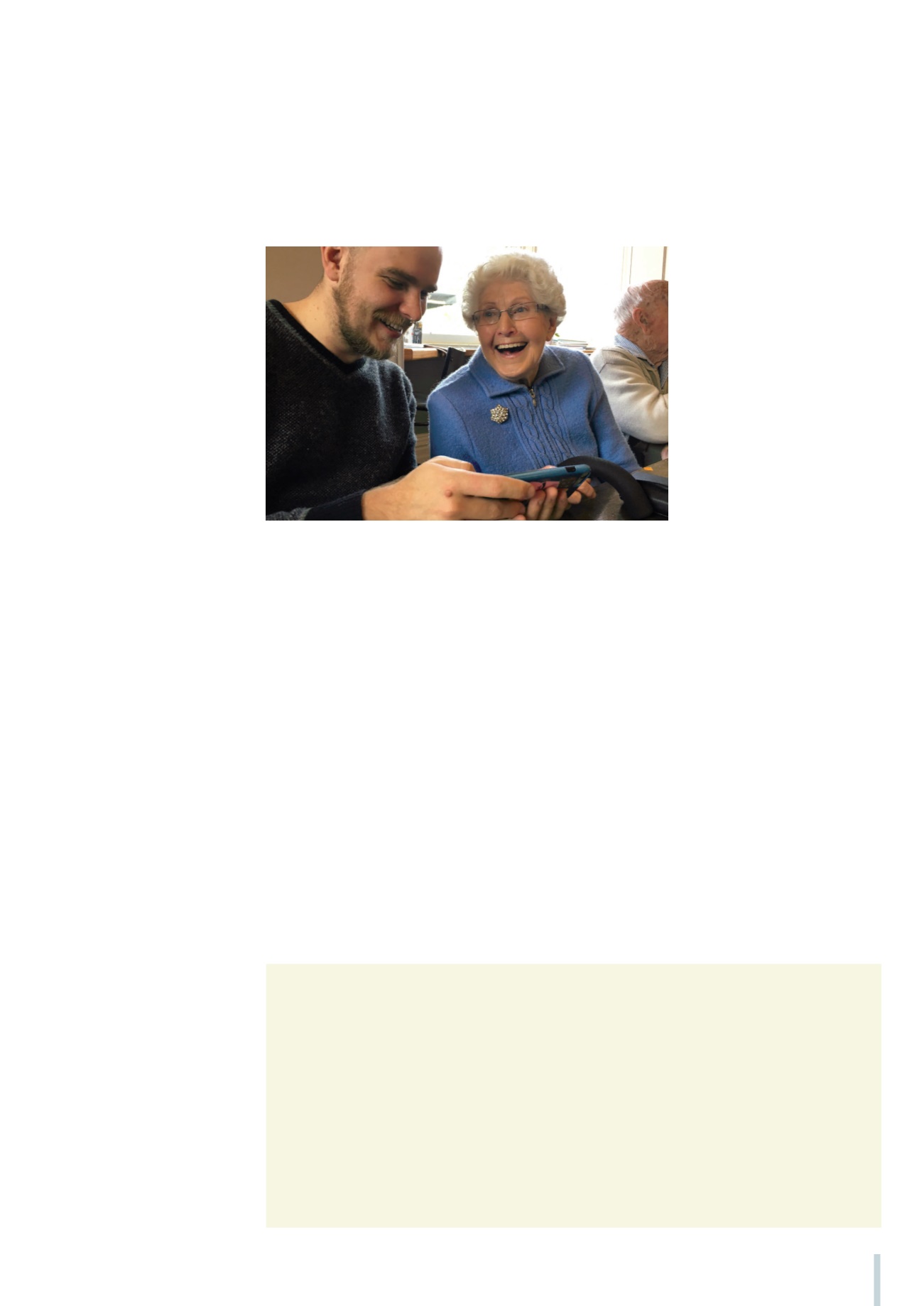
Symposium coordinator Andy Westle discusses plans for the upcoming
event with Ballarat resident Yvonne Bedford, who is living with dementia