


 7 / 24

7
50 YEARS
MKUD ILINDEN
THE MEANING
OF ILINDEN
The name Ilinden (St. Elijah’s Day) is
immortal for Macedonians. Not only is it a
Christian saint’s day, but more importantly it
is a symbol for the Macedonian’s long term
fight for freedom, for his goal in attaining an
independent Macedonian state and church,
for the defence of his identity, language,
and culture. At its core, Ilinden is about the
affirmation of the Macedonian’s right to
recognition and existence on equal footing
with the rest of the people of this world.
1903 ILINDEN
UPRISING
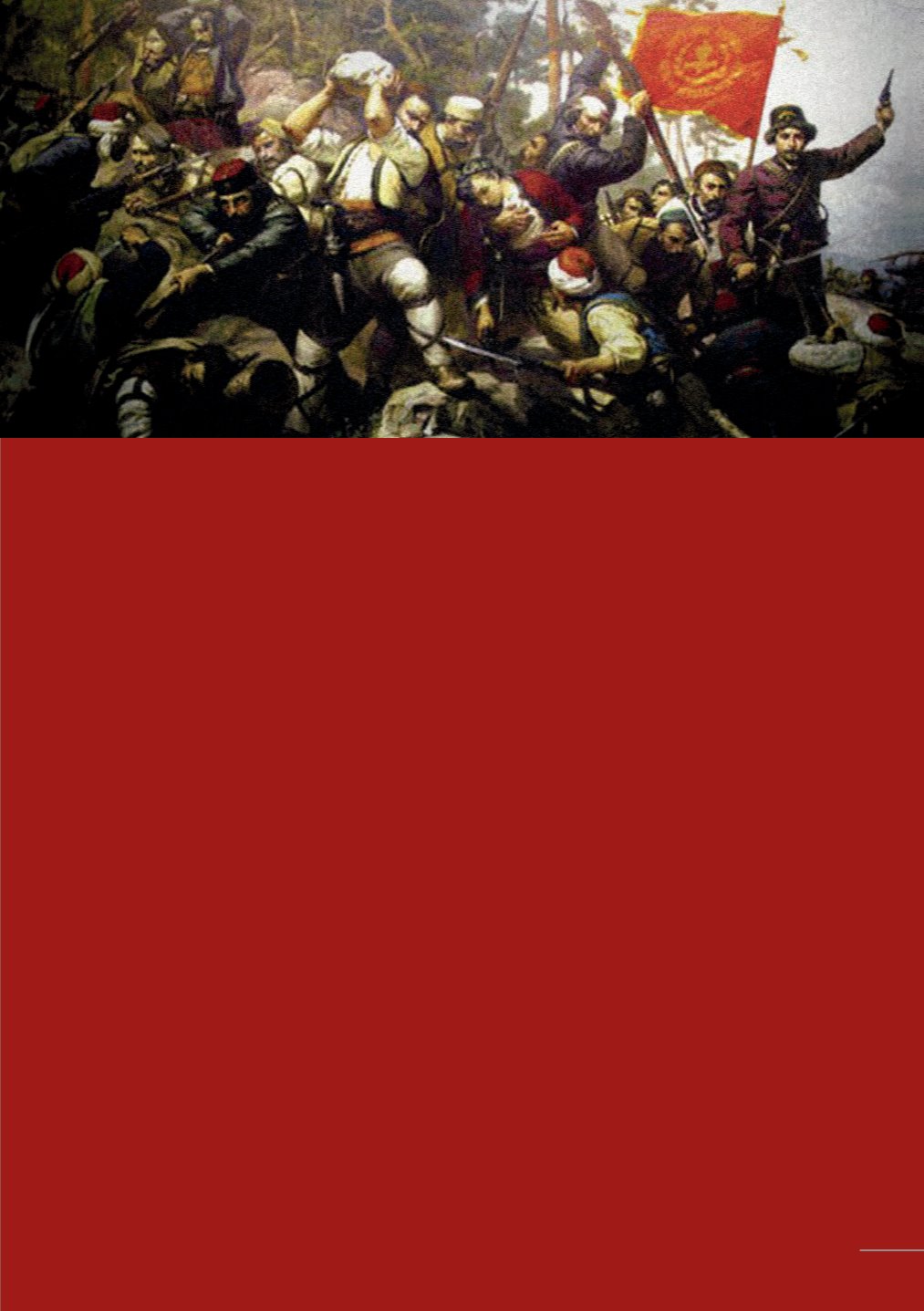
The Ilinden Uprising was a turning point in
the national and revolutionary struggle of
the Macedonians who fought to liberate their
homeland and create an independent state
following 500 years of Ottoman occupation.
The uprising commenced on 2 August 1903
across the whole of Macedonia and was
announced by the ringing of church bells in
Krushevo. Fierce fighting occurred around
Bitola, Ohrid, Kichevo, Lerin and Prilep. The
towns of Krushevo, Nevska and Klisura were
successfully captured by the revolutionaries
(known as ‘Komiti’) who established a
government in Krushevo. They proclaimed the
Krushevo Republic, the first republic on the
Balkans, with Nikola Karev as its
first president.
The Komiti hoped to secure international
intervention in the cause of the Macedonian
independence movement. In response, the
Turkish government took extensive military
measures to quell the uprising: 350,000
soldiers, 3,700 mounted troops and 444
cannons were sent to Macedonia to fight
approximately 26,000 komiti. After fierce
and heroic battles near Sliva and Mechkin
Kamen, the Turkish forces managed to destroy
the Krushevo Republic - 10 days after its
establishment.