


 18 / 68

18
Australian Journal of Dementia Care
October/November 2016 Vol 5 No 5
post-implementation, nine facilities
achieved improvements in their group
WIB scores ranging from 0.1 to 1.0. Three
sites reported a decrease in WIB scores
between 0.1 and 0.6. However, the gains
have been substantial with the combined
result from all sites (as of September
2016) showing an overall WIB score
improvement from 1.3 to 1.6 (see Graph
1).
These WIB score results have, in turn,
raised morale amongst staff; inspiring
them to keep driving ongoing change.
Staff members are surveyed on the first
day of program implementation at their
site and the process is repeated six
months later using the P-CAT. A total of
769 employees were surveyed pre-
implementation and 380 have been
measured to date in post implementation
review. Results from P-CAT staff surveys
have shown (to September 2016) a 9%
increase from 64% to 73% in relation to
employees embracing person-centred
care concepts (see Graph 2). For example,
peer discussions about person-centred
care have increased by 8%, and 15% more
staff feel they have the freedom to alter
work routines based on residents’
preferences.
Small, person-centred changes have
delivered dramatic improvements in
resident well-being. We have observed
that residents appear more relaxed at
mealtimes and are sitting longer at the
dining table. Furthermore, assistance
provided to residents during mealtimes
is more subtle and inclusive. There are
reports of residents enjoying more restful
sleep and accepting personal care they
had previously rejected. Residents are
also conversing more and participating
in activities that provide a sense of
accomplishment including laying tables,
folding laundry and arranging flowers.
Others are spending time in the garden.
We are seeing less use of antipsychotic
medication and reduced resident distress
through better pain management and the
introduction of person-centred strategies.
The rate of antipsychotic medication use
amongst residents living with dementia
at our facilities has reduced from 30%
prior to program implementation to 25%
at 30 June 2016 (Boerth 2016). This has
correlated with a reduction in staff
injuries from behaviour of concern
incidents and a corresponding decrease
in the severity of the reported injuries.
Approximately two thirds (67%) of the
residents mapped before and after
implementation had either no reports of
concerning behaviour or fewer reports
during post-implementation mapping
with incidents of concern decreasing at
eight of our mapped MSUs. An increase
in incidents was recorded at three sites
but we believe this reflects an increased
understanding of changed behaviour
and a corresponding increase in staff
reporting following education.
Staff injuries reported with behaviour
of concern incidents declined by 16%
between 2014 and 2016. Of the incidents
that did occur, there was a 3% increase in
the number of injuries requiring first aid.
However, there was a substantial 40%
reduction in staff injuries requiring
medical treatment and a considerable
65% drop in staff ‘time lost’ through
injury (see Graph 3).
Meeting the sustainability challenge
Our challenge has been finding the right
resource balance to ensure the program’s
long-term viability beyond
implementation. During the roll-out, and
despite high levels of staff awareness
across Eldercare, program resourcing and
sustainability emerged as major concerns
and posed serious risks to its success.
Reluctance amongst nurses and carers to
apply for program-specific roles at some
facilities became evident despite
widespread enthusiasm for the initiative
and documented resident benefits. It was
also revealed that some staff had not
undertaken all the mandatory program
training required. Furthermore, no
allowance was planned for repeat
training at sites where the program had
been introduced because resources were
allocated to implementation elsewhere.
Employee turnover also presented
difficulties with no capacity to develop
new Dementia Excellence Program staff
at sites where it had already been
introduced. In addition, the review
showed that the increasing Dementia
Care Mapping (DCM) requirements
associated with the ongoing roll-out were
preventing program staff from
undertaking core change management
and mentorship responsibilities. We
noticed a slight drop in resident WIB
scores at the pilot site as well, even
though figures still remained above pre-
implementation levels. Aprogram
review was undertaken to develop
response strategies and a sustainability
plan.
Efforts to revitalise the Dementia
Excellence Program began with the
appointment of a new ProgramManager
(PM) who analysed the time it was taking
staff to perform DCM. The PM identified
that ongoing six-monthly post-
implementation full MSU mapping
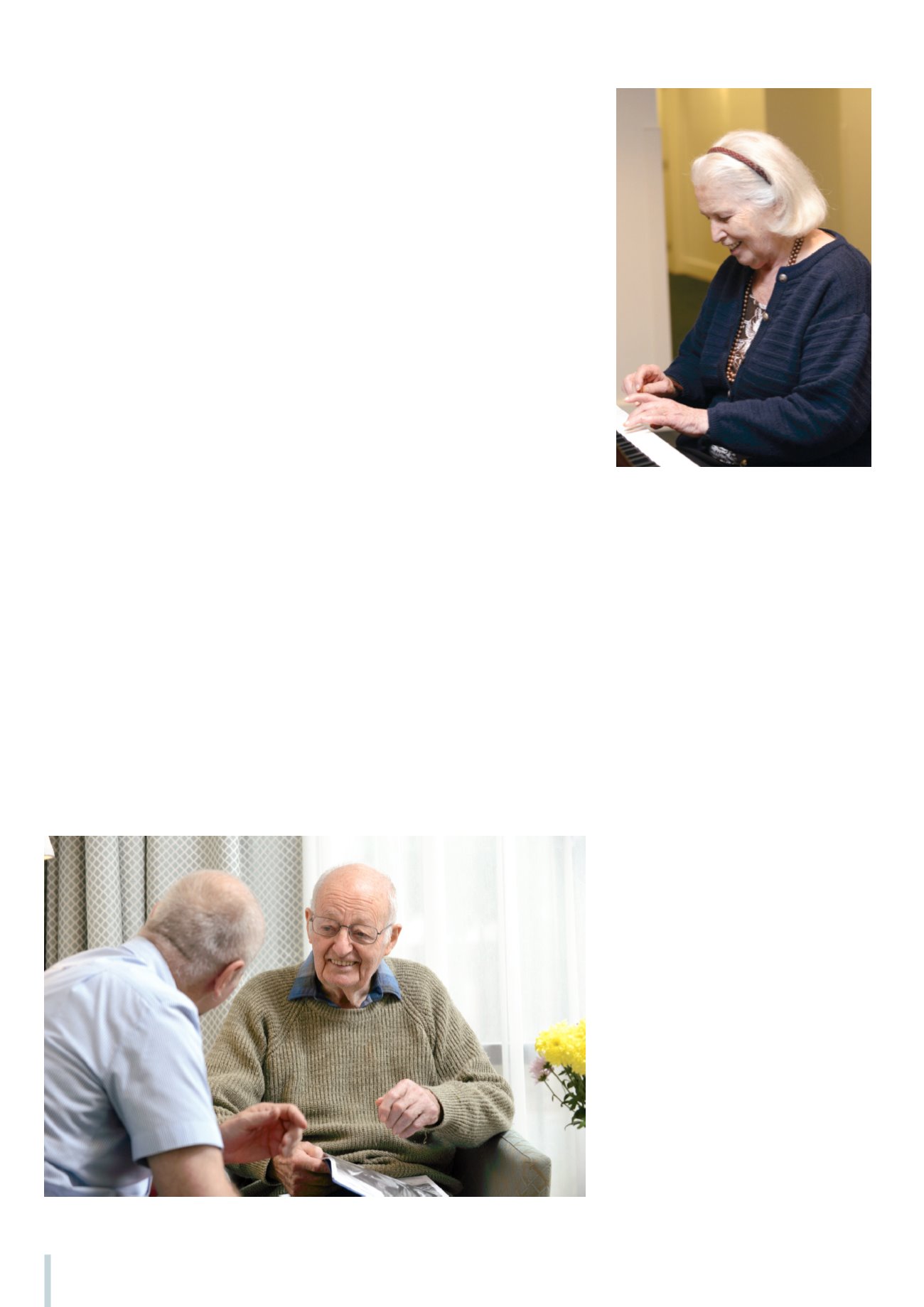
Task-focused care has been replaced with a genuine person-centred approach
The emphasis is on homely living