


 13 / 68

Vol 5 No 5 October/November 2016
Australian Journal of Dementia Care
13
D
ementia impacts cognitive
functioning, and so memory and
judgment may be impaired.
However, consciousness and emotional
memory persist and so even in the later
stages of dementia, people are able to feel
pleasure and joy (Cohen 1988; Cohen-
Mansfield
et al
2012; Guzman-Velez
et al
2014; Sabat 2006; Zeisel 2009).
Having a good quality of life and
experiencing pleasure are key motivations
for many people (Maslow 1970). Social
engagement and leisure activities are not
only pleasurable; they have been shown to
impact on positive well-being (Cutler 2009;
Kenning 2015; Renehan
et al
2012).
Many people spend their leisure time in
the company of others visiting art
galleries. They enjoy the familiarity and
challenge of viewing artworks and the
social interaction that occurs in the gallery
environment. In 2005/2006 almost one
quarter of Australian adults visited a
museum or art gallery (ABS 2005-6).
Similarly for people living with dementia,
having something to do and opportunities
to meet and talk to others can contribute to
a fulfilling life and alleviate feelings of
stress and depression that so often
accompany a diagnosis of dementia (Epp
2003).
Increasingly, art access programs are
being established worldwide that provide
opportunities for people living with
dementia to experience ‘in the moment
pleasure’ through engaging with cultural
artefacts and in social and cultural
activities in gallery spaces.
‘Opening people’s eyes and minds’
The Art Gallery of New SouthWales first
ran a pilot Art Access Program for people
with dementia not long after the successful
launch of the Meet Me At MOMA
program at the Museum of ModernArt
(MOMA) in NewYork in 2006. The
MOMAprogram drew on the growing
understanding of the beneficial impact of
engaging with artworks for people with
dementia (Zeisel 2009) and informed the
development of similar programs
internationally (Basting 2009 p118).
Australia has been at the forefront of
providing opportunities for high-quality
engagement and interaction with artworks
in Sydney (at the Art Gallery of New South
Wales) and Canberra (at the National
Gallery of Australia). The Art Gallery of
New SouthWales’ Art and Dementia
programwas developed in consultation
with MOMAand the National Gallery of
Australia and adapted to suit local
conditions, the works available in the
gallery collection and touring exhibitions,
and the expertise of its gallery staff and
volunteer guides.
The program aims to provide
opportunities to “open people’s eyes and
minds to the wonder, richness and sheer
pleasure of art” (Art Gallery of New South
Wales 2015). It provides people with
dementia, families, caregivers and care
staff guided access toAustralian
masterpieces and international touring
exhibitions (such as
The greats: masterpieces
from the National Galleries of Scotland
, and
Matisse and the moderns
).
The program allows people with
dementia and their carers to view three to
four artworks under the expert guidance
of volunteer guides. These guides have an
in-depth knowledge of the artworks being
viewed and have received specialised
training fromAlzheimer’s Australia NSW,
Danielle Gullotta (the
Art Access Program producer at the Art
Gallery of New SouthWales) andAdriane
Boag (National Gallery of Australia
ProgramCoordinator). It is a structured
experience using a conversational
approach to enable participants to reach
their own interpretation of the works of art
through observation, discussion and by
making associations with their own lives.
Viewing art brings ‘in
the moment’ pleasure
A recent evaluation of the Art and Dementia program at the Art Gallery of NSW shows
that viewing art brings ‘in the moment’ pleasure for people with dementia, as well as
opportunities for storytelling, reminiscence and conversation with friends, family and
carers.
Gail Kenning
reports
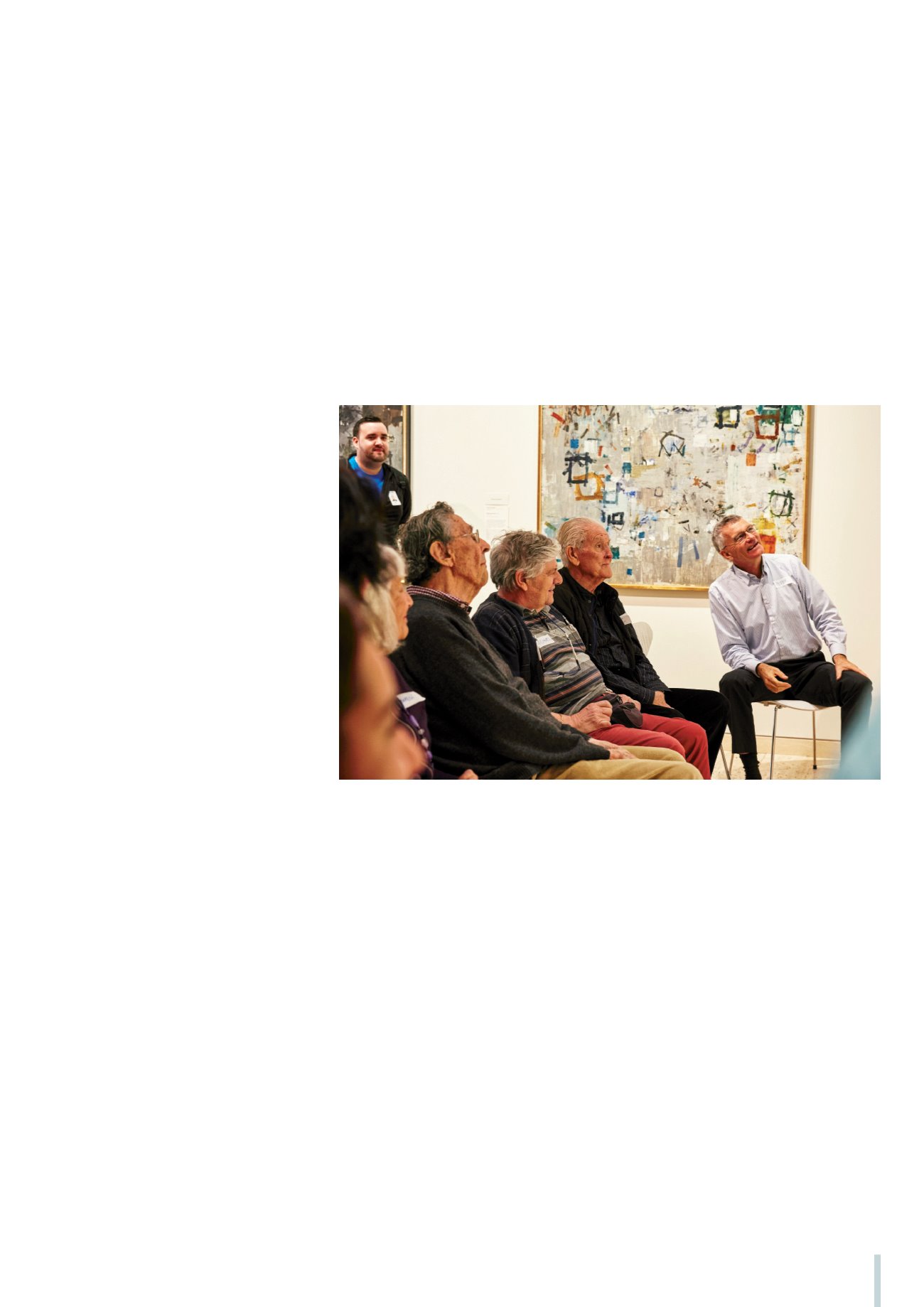
Participants in the Art and Dementia Program at the Art Gallery of New South Wales.
Photo courtesy Art Gallery of NSW