


 36 / 60

36
|
CENTRAL COAST
REGIONAL SNAPSHOT
2016
Water and Environmental Management
Water Management
The Central Coast Regional Plan 2036 states that protecting
water catchments and sustaining high quality and dependable
water supplies is essential for the wellbeing of both the
community and the environment. This has to be managed
so that water is available for agriculture to support food,
production and to meet the increasing demands of urban
communities and industries.
The key water challenges include:
• providing a sustainable long-term water supply for
residential, employment and environmental purposes
• protecting the health of the Region’s rivers, lakes,
underground water sources and estuaries
• protecting water catchment areas from
inappropriate development
• managing population growth in relation to the capacity of
water supply
• investigating alternative water sources that are sustainable
in the longer term.
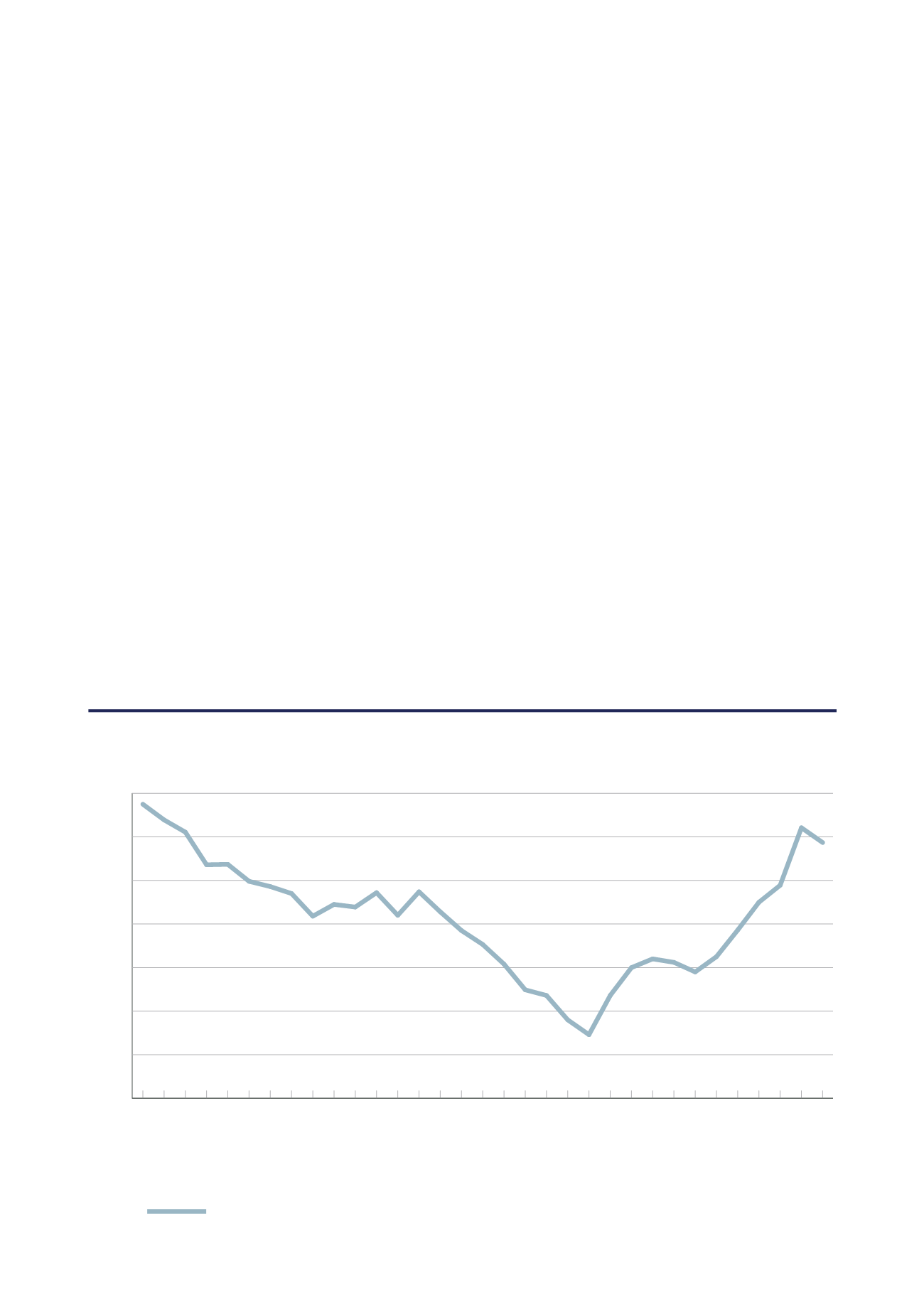
Analysis of water usage data shows demands dropped from 2000
to 2007 in response to restrictions and demand management
during the millennium drought. Demands are slowly rising again
but still less than 2000 even though there has been an increase
in population. Due to limited water sources on the Central Coast
ongoing demand management and water efficiencies are a key
feature in water management on the Central Coast.
CENTRAL COAST DAMS - TOTAL STORAGE
Sustainable Communities and Population Growth
0%
10%
20%
30%
40%
50%
60%
70%
Jun-2014
Jun-2013
Sep-2012
Mar-2012
Sep-2011
Dec-2010
Jun-2010
Sep-2009
Dec-2008
Jun-2008
Sep-2007
Sep-2006
Mar-2006
Sep-2005
Dec-2004
Mar-2004
Mar-2003
Dec-2002
Dec-2001
Jun-2001
Dec-2000
Jun-2000
Mar-1999
Dec-1998
Jun-1998
Sep-1997
Mar-1997
Jun-1996
Sep-1995
Dec-1994
Jun-1994
Dec-1993
Sep-1992
Total Storage
SOURCE:
Central Coast Council