



 6 / 24

6
Moving Learning Forward – Rethinking
Grading & Assessment
This term the teaching staff have been
engaged in the very important task
of reviewing our current grading and
reporting practices. The traditional
grading practices, with which we are
all familiar, were largely born out of a
desire for an efficient way to sort and
sift students for university or future
careers and as a tool for controlling the
behaviour of students through rewards
and punishments.
However, we now know that it is
not helpful to conflate learning and
behaviour, that students need more than
‘good grades’ to be successful in the 21st
century and that the traditional grading
systems can sometimes even hinder the
development of important skills and
dispositions in students.
As we refer to the more recent research
and literature and review our current
practices at Hillcrest, we recognise five
important areas of focus:
The
teaching staff
are committed
to working
to improve
our current
practices...
1. Learning -
The most important
purpose of providing feedback to
students and parents is learning,
not sorting and sifting. Learning
needs to be highly visible both in our
instruction (through well-articulated
learning intentions and success
criteria) and in our assessment
practices (through the use of rubrics
and targeted feedback).
2. Teacher/student relationship -
This
needs to be one of mutual respect
and dialogue. Learning is not
something teachers do ‘to’ students
or that they do by themselves. It is a
collaborative effort.
3. Feedback
- Feedback to and from
students and parents needs to
be regular, ongoing and targeted
enabling students to be clear about
how to move their learning forward.
4. Growth Mindset -
We need to see
our students as God sees them and
believe that each one is valuable and
each one can move forward in their
learning.
5. A broad range of Attributes
- whilst
literacy, numeracy and the other
core disciplines as outlined in the
Australian Curriculum continue to
remain important, we know that
there are other skills and attributes
that students require in order to
be prepared for the increasingly
complex life and work environments
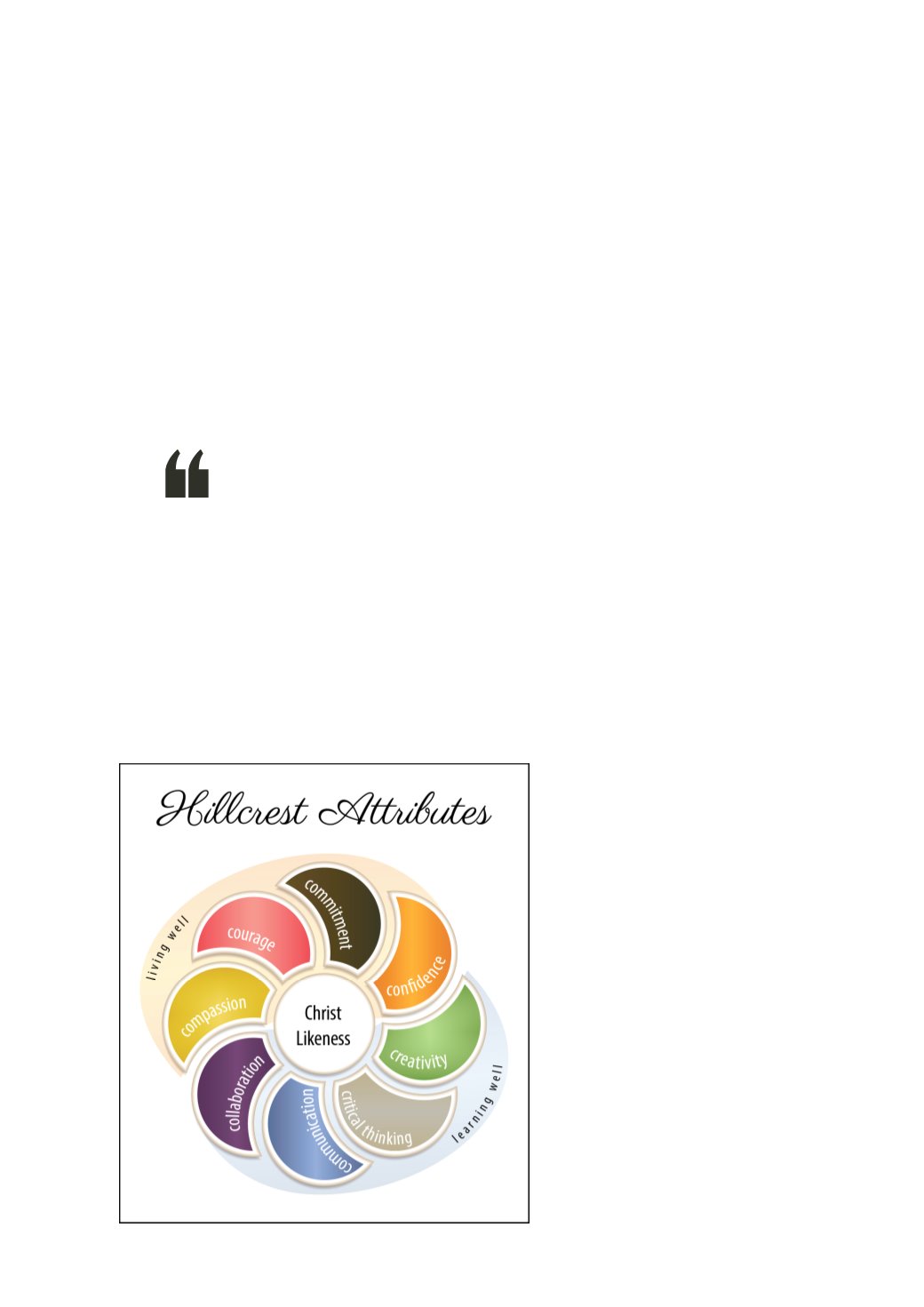
in the 21st century. Our ‘Attributes
of Human Flourishing’ articulate the
key ‘living well’ and ‘learning well’
attributes that we seek to develop in
each student.
The teaching staff are committed to
working to improve our current practices
and, in 2017, we look forward to being
able to provide both students and
parents with more detailed and timely
feedback on student learning in order to
ensure that every student is able to grow
and flourish into all that God has called
them to be.
Mrs Maria Varlet:
-
Head of Learning & Teaching
learning&teaching/